IISER IAT 2026 Registration Ends Today: Exam on June 7
IISER IAT 2026 Registrations Close: A Crucial Gateway for India’s Future Scientists
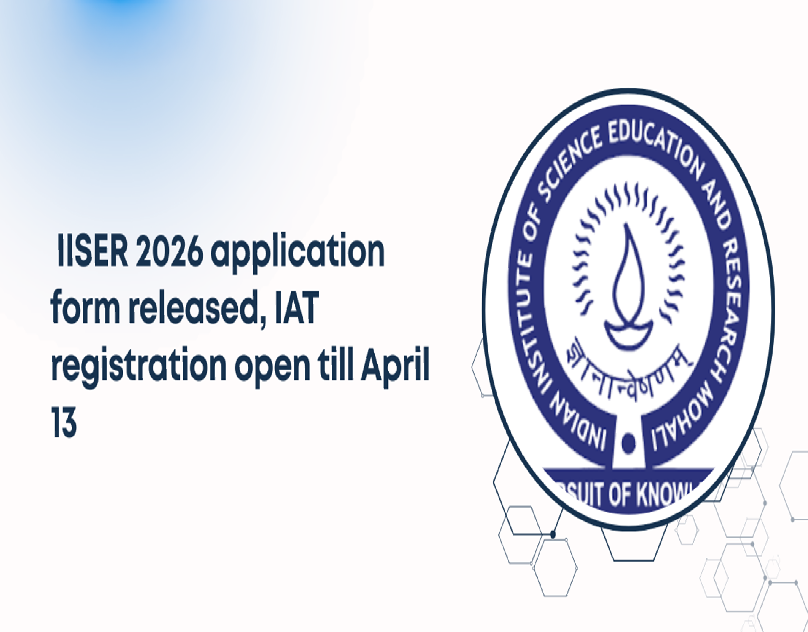
The closing of applications for the IISER Aptitude Test (IAT) 2026 marks a significant moment for thousands of science aspirants across India. With April 13, 2026, set as the final date to apply, candidates are presented with a last opportunity to secure entry into some of the country’s most prestigious science institutions. This deadline is not merely administrative, it symbolises the beginning of a competitive journey towards advanced scientific education and research. For many students, the IISER pathway represents a distinct alternative to conventional engineering or medical routes, offering a deeper engagement with fundamental sciences.
Understanding the IISER Ecosystem
The Indian Institutes of Science Education and Research (IISERs) occupy a unique position within India’s higher education framework. Established with the objective of promoting high-quality scientific research and education, these institutes integrate undergraduate learning with research exposure from the outset.
Admission to these institutions is primarily conducted through the IISER Aptitude Test, a national-level examination that serves as the gateway to programmes such as the five-year BS-MS dual degree and four-year BS courses.
Unlike traditional undergraduate programmes, IISER courses emphasise inquiry-based learning, encouraging students to engage with scientific concepts through experimentation, analysis and independent thought.
The Importance of the Application Deadline
The announcement that April 13 is the final date for registration adds urgency to the admission process. Candidates who have not yet completed their applications must act promptly, as late submissions are typically not entertained.
In an era of digital applications, last-minute technical challenges are not uncommon. As such, students are advised to complete the process well in advance, ensuring that all required documents, including academic records and identification details, are uploaded accurately.
The closure of the application window also signals the transition to the next phase of the admission cycle, where the focus shifts from registration to examination preparation.
Exam Structure and Academic Rigor
The IISER Aptitude Test 2026 is scheduled to be conducted on June 7 in a computer-based format across multiple centres in India.
The examination comprises 60 multiple-choice questions drawn from four core subjects: Biology, Chemistry, Mathematics and Physics. Candidates are given three hours to complete the test, with a marking scheme that rewards accuracy while penalising incorrect responses.
This structure reflects the interdisciplinary nature of the programme, requiring students to demonstrate competence across multiple scientific domains. It also ensures that selected candidates possess a well-rounded academic foundation.
Correction Window and Admit Card Timeline
Following the closure of applications, a brief correction window will be made available from April 13 to April 16, allowing candidates to rectify any errors in their submitted forms.
This stage is particularly important, as inaccuracies in personal or academic details can lead to complications during later stages of the admission process. Candidates are therefore encouraged to review their applications carefully during this period.
The admit cards for the examination are expected to be released on May 24, providing candidates with essential information such as examination centres, reporting times and instructions.
Possession of a valid admit card is mandatory for entry into the examination hall, making it one of the most critical documents in the process.
Beyond the Examination: The Admission Journey
While the IAT serves as the primary selection mechanism, the admission process extends beyond the examination itself. Candidates are ranked based on their performance, and subsequent counselling rounds determine seat allocation across participating institutions.
The IISER network includes several institutes across the country, each offering specialised programmes and research opportunities. Admission to these institutions is highly competitive, with only a fraction of applicants securing a place.
This rigorous selection process ensures that the institutes maintain their high academic standards while attracting some of the brightest minds in the country.
The Appeal of IISER Programmes
One of the defining features of IISER education is its integration of teaching and research. Students are introduced to laboratory work, research methodologies and scientific writing at an early stage, fostering a deeper understanding of their chosen disciplines.
The curriculum is designed to encourage exploration, allowing students to engage with a wide range of subjects before specialising in a particular field. This flexibility is particularly valuable in a rapidly evolving scientific landscape, where interdisciplinary knowledge is increasingly essential.
Moreover, IISER graduates often pursue careers in academia, research institutions, industry and policy-making, reflecting the versatility of the education they receive.
A Shift in Student Aspirations
The growing interest in IISER admissions reflects a broader shift in student aspirations. While engineering and medicine have traditionally dominated the academic landscape, there is a renewed interest in fundamental sciences and research careers.
This shift is driven in part by increased awareness of global scientific challenges, ranging from climate change to public health crises. Students are increasingly recognising the importance of contributing to these fields through research and innovation.
The IISER system, with its emphasis on scientific inquiry, is well positioned to nurture this new generation of researchers.
Preparation Strategies for Aspirants
With the application window now closed, candidates must turn their attention to preparation. The interdisciplinary nature of the IAT requires a balanced approach, with equal emphasis on all four core subjects.
Regular practice, revision of fundamental concepts and familiarity with the examination pattern are essential. Solving previous years’ question papers can provide valuable insights into the level of difficulty and types of questions asked.
Time management is another critical factor, as the three-hour duration demands both speed and accuracy. Candidates must develop strategies to allocate time effectively across different sections of the paper.
Challenges and Competition
The popularity of IISER programmes also brings with it intense competition. With a large number of applicants vying for a limited number of seats, the margin for error is minimal.
Candidates must therefore approach the examination with a clear strategy and a disciplined study routine. At the same time, they must remain adaptable, as the nature of competitive examinations often involves unexpected challenges.
Despite these pressures, the rewards of securing admission to an IISER are substantial, both in terms of academic opportunities and long-term career prospects.
The Broader Impact on Scientific Education
The IISER admission process is not just about individual success; it also reflects broader trends in India’s educational landscape. By attracting talented students to the sciences, these institutions play a crucial role in strengthening the country’s research ecosystem. As India seeks to enhance its global standing in science and technology, the importance of such initiatives cannot be overstated. Programmes like those offered by IISER contribute to the development of a skilled and innovative workforce capable of addressing complex challenges.
Looking Ahead
As the IISER IAT 2026 approaches, candidates find themselves at a critical juncture. The closing of the application window marks the end of one phase and the beginning of another, one defined by preparation, anticipation and aspiration. For those who have successfully applied, the weeks leading up to the examination will be a period of intense focus. For others, it serves as a reminder of the importance of timely action in competitive academic environments.
Conclusion
The closure of IISER IAT 2026 registrations underscores the structured and time-sensitive nature of competitive examinations. With the exam scheduled for June 7 and subsequent stages already outlined, the pathway to IISER admission is both clear and demanding. For aspiring scientists, this journey represents more than an academic pursuit, it is an opportunity to engage with knowledge, contribute to discovery and shape the future of science. As the process unfolds, the focus will remain on diligence, preparation and the enduring quest for excellence in scientific education.