IIT Guwahati Unveils Sunlight-Driven Method to Turn CO₂ into Methanol Fuel
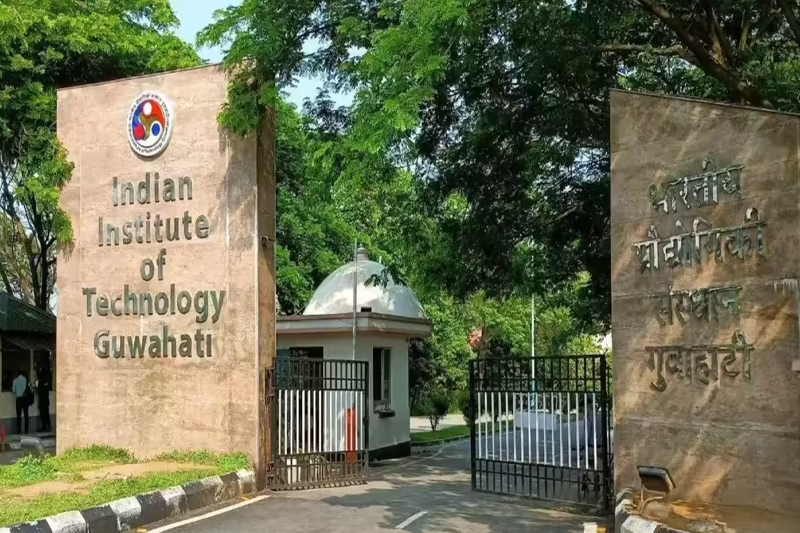
In a groundbreaking development, researchers at the Indian Institute of Technology (IIT) Guwahati have introduced a novel approach to transform carbon dioxide (CO₂) emissions into methanol fuel using sunlight. This innovative method, based on advanced photocatalytic materials, has the potential to address two of the most pressing challenges of our time: reducing carbon emissions and meeting growing energy demands in a sustainable manner. The study, recently published in the Journal of Materials Science, highlights the institute’s ongoing efforts to develop environmentally friendly solutions that are both practical and scalable.
The Motivation: Turning Emissions into Clean Fuel
According to Professor Mahuya De from IIT Guwahati’s Department of Chemical Engineering, the continued reliance on petroleum-based fuels is a major contributor to carbon emissions, which in turn accelerate global warming and environmental degradation. She explained:
“The dependence on petroleum-based fuels continues to be a source of carbon dioxide emissions, causing environmental stress and global warming. To address this, researchers are working on designing photocatalytic methods to convert carbon dioxide into clean fuels.”
The research focuses on creating technologies that not only reduce emissions but also produce usable energy, transforming what is typically a waste product into a valuable resource. In other words, the team is exploring ways to achieve a circular carbon economy, where CO₂ is continuously recycled into clean fuel rather than being released into the atmosphere.
The Science Behind the Innovation
The IIT Guwahati team centered their efforts on graphitic carbon nitride (g-C₃N₄), a non-toxic, cost-effective, and metal-free photocatalytic material. Graphitic carbon nitride has been recognized for its potential in photocatalytic applications, but previous systems faced limitations. Traditional photocatalysts often suffer from rapid energy dissipation and low conversion efficiency, which makes them impractical for large-scale use.
To overcome these hurdles, the researchers combined graphitic carbon nitride with few-layer graphene, a form of carbon known for its exceptional electrical conductivity and energy transfer capabilities. By blending the two materials, the team created a catalyst capable of retaining energy more efficiently during the photocatalytic process. This synergistic combination allowed the catalyst to maintain effective charge separation when exposed to sunlight, which is critical for converting CO₂ into methanol.
Results: Enhanced Methanol Production
Experimental tests revealed that the composite material containing 15% graphene by weight demonstrated significant improvements in performance. The enhanced energy retention and charge separation allowed the catalyst to convert CO₂ into methanol more efficiently than previous photocatalytic systems.
Equally important, the catalyst exhibited long-term stability, retaining its efficiency over extended periods. This durability makes the technology a strong candidate for industrial-scale applications, where consistent performance over time is crucial.
Professor De highlighted the broader significance of the findings:
“The present work is expected to contribute towards mitigating environmental problems with simultaneous contribution towards green energy. Converting carbon dioxide to greener fuel using solar energy is a promising technology towards this direction.”
Potential Industrial Applications
One of the most exciting aspects of this research is its applicability in heavy industries. Professor De noted that the technology could be integrated into sectors that are traditionally highly carbon-intensive, such as:
- Thermal power plants
- Cement manufacturing units
- Steel production facilities
- Petrochemical refineries
In these settings, the sunlight-driven CO₂ conversion system could capture emissions at the source and transform them into methanol, which can then be used as a fuel or chemical feedstock. This approach not only reduces environmental impact but also contributes to energy production, creating a dual benefit for industry and society.
The research team envisions scaling up the process to develop a durable, continuous system capable of converting large volumes of CO₂ into methanol using solar energy. By doing so, they aim to demonstrate the practical viability of renewable photocatalysis in industrial environments.
The Promise of a Circular Carbon Economy
This breakthrough aligns with the global movement toward a circular carbon economy, where carbon emissions are not merely minimized but actively repurposed into valuable resources. Unlike traditional mitigation strategies, which often focus solely on emission reduction, photocatalytic conversion of CO₂ provides a sustainable energy solution while simultaneously addressing environmental concerns.
Methanol, the target fuel in this process, is a versatile energy carrier. It can be used directly as a fuel, blended with conventional fuels, or employed as a raw material in the chemical industry. This versatility enhances the economic feasibility of the technology, providing industries with both environmental and financial incentives to adopt the method.
Advantages of the IIT Guwahati Approach
Several features make this sunlight-driven CO₂ conversion method particularly promising:
- Metal-free and non-toxic catalyst: Using graphitic carbon nitride avoids the environmental and cost concerns associated with metal-based photocatalysts.
- Enhanced energy retention and efficiency: The addition of graphene improves charge separation, enabling more efficient methanol production.
- Long-term stability: The catalyst maintains performance over extended use, essential for industrial deployment.
- Industrial applicability: The technology can be integrated into large-scale industrial processes, offering real-world impact.
- Dual benefits: The system reduces carbon emissions while simultaneously producing clean fuel, addressing both environmental and energy challenges.
Future Directions
Looking ahead, the IIT Guwahati team plans to focus on scaling up the technology and developing a continuous CO₂-to-methanol conversion system. Such a system would harness sunlight in industrial settings, making it possible to turn emissions into a reliable source of renewable fuel on a large scale.
Professor De emphasized the broader implications:
“The technology developed by our team holds the potential to be used in industries, supporting the transition towards a circular carbon economy and a cleaner energy future.”
If successful, this approach could transform the way industries manage carbon emissions, shifting the focus from pollution control to resource generation.
Conclusion: Pioneering a Sustainable Future
IIT Guwahati’s research marks a significant step forward in sustainable energy technology, demonstrating that carbon dioxide—a major contributor to climate change—can be converted into a useful fuel with the help of sunlight and advanced materials. By combining graphitic carbon nitride and graphene, the team has addressed longstanding challenges in photocatalytic efficiency and stability, paving the way for industrial-scale applications.
This innovation holds promise not just for reducing emissions but also for creating green energy solutions that are economically viable and environmentally friendly. As industries worldwide seek ways to reduce their carbon footprint, sunlight-driven CO₂ conversion into methanol could emerge as a game-changing technology, contributing to a cleaner, more sustainable future.