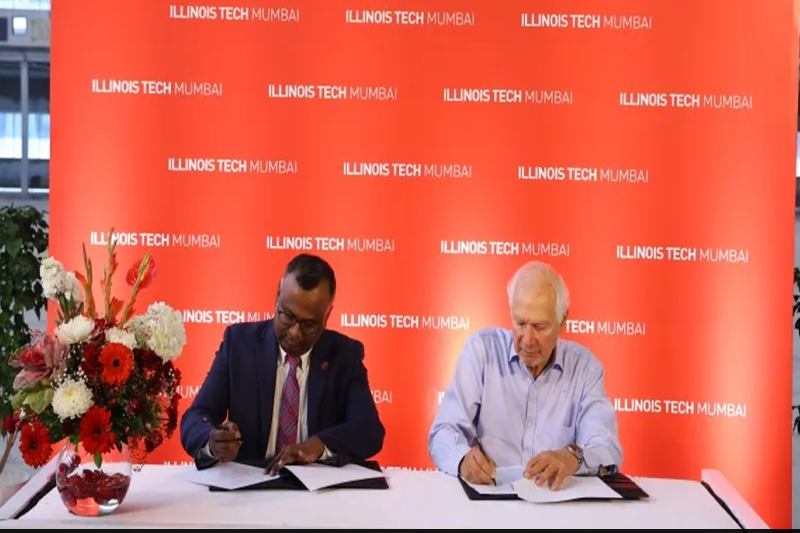
Illinois Institute Of Technology To Launch Campus In Mumbai, Applications Begin
The global higher education landscape is witnessing a notable development as the Illinois Institute of Technology (Illinois Tech), a distinguished U.S.-based research university, prepares to establish its first Indian campus in Mumbai. Located within the Godrej Business District in Vikhroli, the forthcoming campus is expected to welcome its inaugural cohort in the autumn of 2026, with applications already open for prospective students. This move represents a significant milestone not only for the institution but also for India’s evolving higher education ecosystem, which is increasingly embracing international collaboration, interdisciplinary learning, and industry-aligned academic pathways.
At a time when global mobility in education is undergoing transformation, international universities are exploring innovative ways to engage with emerging markets. India, with its vast youth population, expanding economy, and growing appetite for specialised technical education, has naturally emerged as a focal point. Illinois Tech’s decision to establish a degree-granting campus in Mumbai reflects both strategic foresight and a recognition of the country’s expanding role in the global knowledge economy.
A Strategic Academic Expansion
Illinois Tech’s Mumbai campus will offer undergraduate and postgraduate programmes in high-demand disciplines, including computer science, artificial intelligence, data science, and business. These fields are not only academically relevant but also closely aligned with industry trends, employment forecasts, and technological innovation trajectories. By focusing on these areas, the institution aims to prepare graduates for careers that demand both technical expertise and adaptive, interdisciplinary thinking.
Importantly, the curriculum is expected to mirror the rigorous academic standards of Illinois Tech’s Chicago campus. The university has emphasised that its experiential, multidisciplinary, and industry-connected pedagogical approach will remain consistent across both locations. This alignment ensures that students studying in Mumbai will benefit from globally recognised academic quality while remaining embedded within India’s dynamic economic context.
Such cross-border curriculum consistency also facilitates academic mobility, collaborative research opportunities, and potential exchange pathways, thereby enhancing the global exposure of students without necessitating overseas relocation.
Infrastructure Designed for Modern Learning
Spread across approximately 90,000 square feet, the Mumbai campus is being designed as a contemporary learning environment equipped with advanced classrooms, state-of-the-art laboratories, a modern library, collaborative learning spaces, and sports facilities. The emphasis on integrated infrastructure reflects a broader shift in higher education towards holistic campus ecosystems where academic learning is complemented by research, collaboration, and personal development.
Modern laboratories will support cutting-edge research and practical skill development, particularly in technology-driven disciplines such as artificial intelligence and data science. Collaborative spaces are equally significant, fostering interdisciplinary dialogue, innovation, and peer learning, i.e - attributes increasingly valued in both academic and professional contexts.
Access to global faculty, including experts from the Chicago campus, further enhances the academic proposition. Exposure to international teaching perspectives, research methodologies, and industry insights can enrich the student experience and broaden intellectual horizons.
Industry Proximity and Experiential Learning
The choice of the Godrej Business District as the campus location is particularly strategic. Surrounded by more than 100 companies, including multinational corporations, the district offers a fertile environment for industry collaboration, internships, live projects, and professional networking.
This proximity aligns with Illinois Tech’s longstanding emphasis on experiential learning. Rather than confining education to theoretical instruction, the institution seeks to integrate academic study with real-world application. Students are likely to benefit from mentorship opportunities, industry guest lectures, collaborative research initiatives, and career placement pathways facilitated by this ecosystem.
Such industry-academia integration is increasingly essential in contemporary higher education. Employers today seek graduates who possess not only theoretical knowledge but also practical problem-solving skills, adaptability, and an understanding of workplace dynamics. The Mumbai campus aims to bridge this gap effectively.
Historical Approval and Regulatory Context
The establishment of the Mumbai campus carries particular significance as Illinois Tech has received approval from India’s University Grants Commission (UGC) to operate as a degree-granting foreign institution. This historic authorisation reflects India’s evolving regulatory approach towards international higher education collaboration, encouraging global institutions to contribute to domestic academic development while maintaining quality standards.
The move aligns with broader educational reforms that emphasise internationalisation, academic excellence, and research collaboration. By welcoming reputable global universities, India aims to enhance educational diversity, attract international students, and strengthen its position as an emerging global education hub.
Institutional and Personal Connections
Illinois Tech’s ties with India extend beyond institutional strategy. The involvement of Jamshyd N. Godrej, chairman and managing director of Godrej & Boyce and an alumnus of the university, adds a personal dimension to the initiative. His association symbolises the enduring academic and professional connections that global education fosters.
Such alumni engagement often plays a pivotal role in institutional expansion, facilitating partnerships, philanthropic support, and industry collaboration. In this case, it underscores the reciprocal relationship between higher education institutions and the industries they help shape.
University President Raj Echambadi has emphasised that the decision reflects both a strategic vision for global engagement and a recognition of India’s longstanding relationship with the institution. This dual perspective highlights the importance of cultural, academic, and professional ties in shaping international educational initiatives.
Opportunities for Indian Students
For Indian students, the establishment of a globally recognised university campus domestically offers several advantages. Access to international-quality education without the financial and logistical challenges of overseas study can make global academic standards more attainable. Additionally, studying within India allows students to remain connected to local industries, cultural contexts, and employment markets.
The focus on emerging fields such as artificial intelligence, data science, and business analytics also aligns with India’s economic priorities. As sectors like technology, finance, healthcare, and manufacturing increasingly rely on advanced data-driven processes, demand for skilled professionals continues to grow. Graduates from such programmes are likely to find diverse career opportunities both within India and internationally.
Research and Innovation Prospects
Beyond teaching, the Mumbai campus is expected to foster collaborative research initiatives involving local academic institutions, industry partners, and global faculty. Research collaboration is essential for addressing complex challenges ranging from technological innovation to sustainable development.
By creating platforms for joint research, the campus can contribute to knowledge generation while strengthening India’s research ecosystem. Interdisciplinary research combining technology, business, and social sciences is particularly crucial in addressing contemporary global challenges.
Broader Implications for Indian Higher Education
The arrival of international universities such as Illinois Tech may also stimulate healthy competition within the Indian higher education sector. Domestic institutions could be encouraged to enhance infrastructure, curriculum design, research output, and industry engagement in response to evolving expectations.
Moreover, increased international presence can facilitate academic exchange, collaborative degree programmes, and global research partnerships. These developments collectively contribute to raising educational standards and expanding opportunities for students.
Looking Ahead
While the establishment of the Mumbai campus is undoubtedly promising, its long-term success will depend on effective implementation, sustained academic quality, and meaningful industry engagement. Ensuring accessibility, maintaining rigorous academic standards, and fostering inclusive campus cultures will be key considerations.
Nevertheless, Illinois Tech’s decision to launch a campus in Mumbai represents a forward-looking investment in India’s educational future. It symbolises the growing convergence of global academic institutions with emerging knowledge economies and reflects the increasing importance of cross-border collaboration in higher education.
As applications open for the first cohort scheduled for autumn 2026, prospective students, educators, and industry stakeholders alike will watch with interest. If executed thoughtfully, the initiative could become a model for international academic partnerships, offering students the best of global education while remaining rooted in local relevance.
Ultimately, the Mumbai campus stands as a testament to the evolving nature of higher education, i.e - increasingly global, technologically driven, and deeply interconnected with industry and society.