Indian Army Agniveer Recruitment 2026: Opportunities, Eligibility, Selection Process and Career Prospects
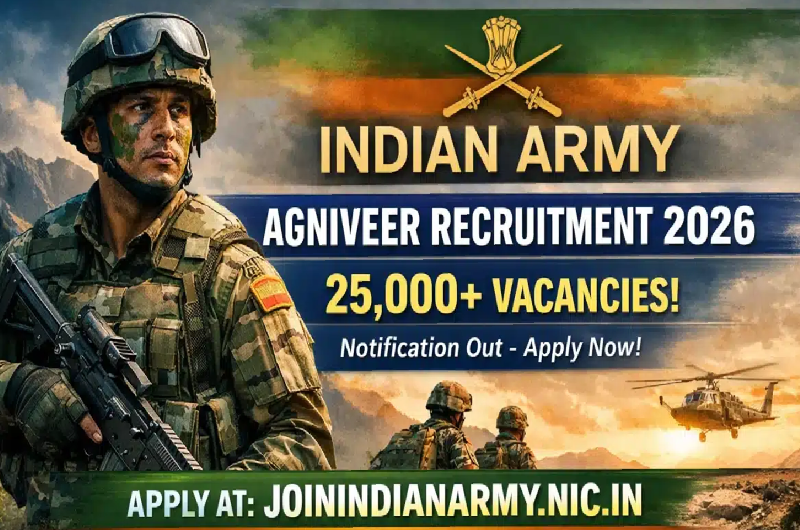
The announcement of the Agniveer Recruitment 2026 has generated considerable national interest, with the Indian Army opening more than 25,000 vacancies across diverse categories. This large-scale recruitment drive reflects both the evolving personnel framework of the armed forces and a broader national emphasis on youth engagement, skill development and disciplined service. For aspirants seeking a career that combines professional growth with patriotic duty, this opportunity carries significant appeal.
A National Recruitment Drive
The recruitment notification, released through the official portal, confirms that online applications commenced on 13 February 2026 and will remain open until 1 April 2026. Conducted nationwide, the drive is part of the government’s newer military service framework that offers selected candidates a four-year tenure. During this period, recruits receive structured training, operational exposure, financial support and post-service benefits intended to facilitate future career pathways. Such initiatives have broadened access to defence careers, particularly for young individuals from varied academic and socio-economic backgrounds. The scale of vacancies indicates sustained manpower requirements as well as an institutional effort to cultivate technologically aware, physically capable and professionally adaptable soldiers.
Categories of Vacancies
The recruitment spans several entry streams, each tailored to specific operational or technical needs:
- General Duty (GD)
- Technical roles
- Clerk/Storekeeper Technical
- Tradesman posts
- Soldier Pharma
- Technical Nursing Assistant
- Women Military Police
This diversity ensures opportunities for candidates with academic qualifications ranging from Class 8 completion to higher secondary education and graduation. The inclusion of specialised roles such as pharmaceutical and nursing assistants also signals the increasing importance of technical competence within modern military operations.
Eligibility Requirements
Age Criteria
Candidates must generally fall within the age bracket of 17.5 to 21 years. This range reflects the armed forces’ preference for young recruits who can undergo rigorous training while also benefiting from long-term physical conditioning and professional discipline.
Educational Qualifications
Educational eligibility varies by post:
- Tradesman roles may accept candidates with Class 8 qualifications.
- General Duty and certain technical positions require Class 10 or 12.
- Highly specialised posts may necessitate further academic credentials.
This inclusive eligibility framework allows aspirants from multiple educational pathways to participate.
Physical Standards
Physical fitness remains fundamental. Typical requirements include:
- Minimum height of approximately 170 cm
- Chest measurement around 77 cm (unexpanded) with a minimum 5 cm expansion
These benchmarks ensure operational readiness while maintaining uniform standards across recruitment centres.
Application Fee and Payment Process
Applicants are required to pay a processing fee of ₹250 through online channels, usually routed via the State Bank of India payment gateway. Accepted payment methods include debit cards, credit cards and net banking.
The fee is non-refundable, underscoring the importance of careful eligibility verification before submission. Transparent digital payment systems have streamlined application processes while minimising administrative delays.
Selection Procedure: A Multi-Stage Assessment
The recruitment process comprises three principal stages, each designed to evaluate different competencies.
1. Computer-Based Examination
Often referred to as the Common Entrance Examination (CEE), this stage tests academic aptitude and analytical capability. Subjects may include:
- General Knowledge
- General Science
- Mathematics
- Logical Reasoning
- Physics and Chemistry (for technical posts)
- Computer Science
- General English
For General Duty candidates, the examination typically involves 50 questions carrying 100 marks. Technical and clerical categories may feature higher scoring potential to reflect specialised skill requirements.
This digital testing format promotes efficiency, transparency and standardised evaluation nationwide.
2. Recruitment Rally
Candidates clearing the written test proceed to physical evaluation through recruitment rallies. These events assess endurance, agility and overall fitness through activities such as:
- A 1.6 km timed run
- Pull-up exercises
- A 9-foot ditch crossing
- Zig-zag balance tests
- Physical measurement verification
- Comprehensive medical examination
These assessments ensure that recruits can meet the demanding physical expectations of military service.
3. Document Verification
The final stage involves scrutiny of educational certificates, identity documentation and eligibility proofs. Accuracy and authenticity are essential, as discrepancies may lead to disqualification.
Pay Structure and Financial Benefits
The remuneration framework provides progressive financial incentives over the four-year service period. Monthly compensation begins at approximately ₹30,000 in the first year and rises incrementally to around ₹40,000 by the fourth year.
A portion of the salary contributes to an Agniveer Corpus Fund, with matching contributions from the Government of India. This structured savings component aims to provide financial stability upon completion of service, supporting education, entrepreneurship or further career development.
In-hand earnings vary due to this contribution structure, but the overall package remains competitive when combined with training, exposure and long-term benefits.
Professional Development and Skill Acquisition
Beyond financial considerations, the recruitment programme emphasises skill-building:
- Technical training in advanced equipment and systems
- Leadership development and teamwork experience
- Discipline and resilience cultivation
- Exposure to modern defence technologies
These competencies often translate effectively into civilian careers, including security services, logistics, engineering support and public administration.
Societal and National Implications
Large-scale recruitment initiatives also serve broader societal purposes. They:
- Channel youthful energy into structured national service
- Promote physical fitness and civic responsibility
- Foster social cohesion through diverse regional participation
- Enhance national preparedness in an evolving security landscape
By integrating training with career development, such programmes attempt to balance defence requirements with youth employment priorities.
Preparing for Application: Key Considerations
Prospective applicants should approach the process strategically:
- Verify Eligibility Carefully
Ensure educational qualifications, age criteria and physical standards are met.
- Prepare Academically
Focus on mathematics, general science, reasoning and current affairs.
- Build Physical Fitness Early
Consistent endurance training is crucial for rally assessments.
- Maintain Accurate Documentation
Properly organised certificates minimise last-minute complications.
- Stay Informed
Regularly consult official notifications for updates or procedural changes.
Conclusion
The Agniveer Recruitment 2026 represents a significant opportunity for young Indians seeking purposeful careers that combine national service, professional development and financial stability. With more than 25,000 vacancies spanning technical, administrative and operational roles, the initiative offers wide accessibility while maintaining rigorous standards. For motivated candidates, this pathway promises not merely employment but a formative life experience marked by discipline, skill acquisition and civic contribution. As defence services continue to evolve in response to technological advancement and strategic priorities, programmes such as this are likely to remain central to building a capable, future-ready force while simultaneously nurturing the nation’s youth.