Jharkhand Civil Service Age Limit Controversy: Understanding the Aspirants’ Protest and the Larger Implications
The Jharkhand Public Service Commission (JPSC) has once again found itself at the centre of intense debate following protests by civil service aspirants over the age criteria prescribed for the Jharkhand Civil Services Competitive Examination 2025. Candidates argue that the revised age cut-off unfairly excludes many otherwise eligible aspirants, reigniting long-standing concerns about examination irregularities, delayed recruitment cycles, and the need for greater administrative consistency in the state’s civil service examinations.
While public service recruitment inevitably involves strict eligibility frameworks, the current controversy underscores a deeper issue, i.e - the impact of inconsistent exam scheduling on aspirants’ careers. For many candidates in Jharkhand, the dispute is not merely about numbers or dates; it reflects years of uncertainty, deferred opportunities, and perceived inequities in the examination process.
The Core of the Dispute: Age Cut-Off Criteria
At the heart of the controversy lies the age calculation for the Jharkhand Civil Services Competitive Examination 2025, notified under Advertisement No. 01/2026. The Commission has set both the minimum and maximum age limits with reference to 1 August 2026. On paper, such a reference date may appear administratively straightforward. However, aspirants contend that the maximum age should instead have been calculated with reference to 1 August 2018.
This seemingly technical distinction carries significant consequences. Candidates who would have fallen within the permissible age bracket under earlier norms now find themselves ineligible. Many argue that this shift disregards the irregular pattern of examinations in the state and penalises aspirants for delays beyond their control.
From the aspirants’ perspective, the issue is fundamentally about equity. If examinations are not conducted regularly, they argue, age criteria should reflect that reality rather than adhere to a rigid timeline that effectively shortens candidates’ window of opportunity.
Protests and Appeals to State Authorities
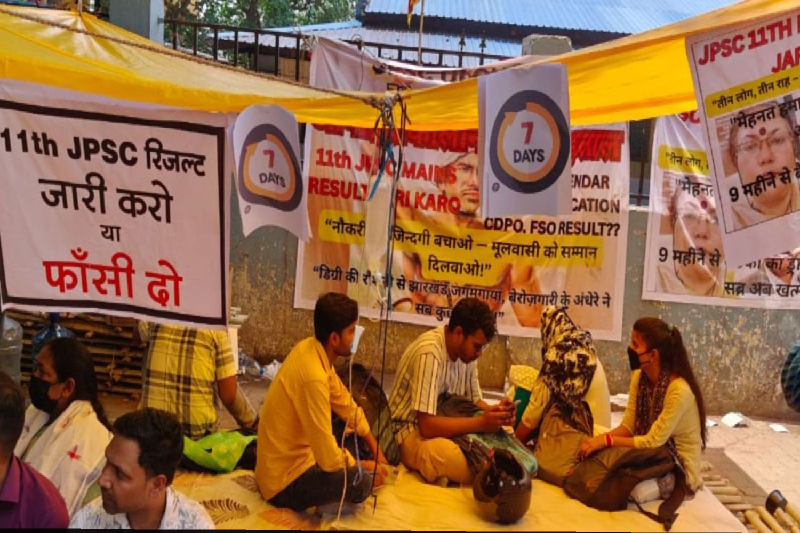
The dissatisfaction has manifested in visible public demonstrations. Aspirants have staged protests outside JPSC offices in Ranchi, calling for immediate revision of the age criteria. Beyond street protests, candidates have also pursued institutional channels, submitting formal representations to the Chief Minister and seeking the Governor’s intervention.
These actions indicate both the seriousness of the issue and the aspirants’ determination to secure administrative redress. Many candidates emphasise that their demand is not for relaxation without precedent but for alignment with what they consider a fair and historically consistent approach.
The protests also highlight a broader trend in public service recruitment across India, where aspirants increasingly seek transparency, consistency, and responsiveness from recruitment bodies.
Irregular Examination Scheduling: A Persistent Concern
One of the most compelling arguments advanced by aspirants relates to the irregular scheduling of civil service examinations in Jharkhand. Since the state’s formation in 2000, only eight combined civil service examinations have reportedly been conducted. Ideally, aspirants note, there would have been roughly one examination per year, amounting to around twenty-five examinations over the same period.
Such gaps have tangible consequences. Candidates often spend years preparing for these highly competitive examinations. When recruitment cycles are delayed or skipped altogether, aspirants may age out of eligibility despite sustained preparation and readiness.
Past examination reference dates illustrate the inconsistency:
- For the 2017 examination, the maximum age reference date was 1 August 2013.
- The 2023 examination referenced 1 August 2017 for maximum age eligibility, with a later minimum-age reference date.
- The 2025 examination now sets both minimum and maximum ages as of 1 August 2026, a shift that many candidates view as chronologically inconsistent.
Aspirants argue that such variations disrupt predictability, making it difficult to plan preparation timelines and career strategies.
The Human Dimension: Aspirations Deferred
Behind the statistics lie individual stories of perseverance and disappointment. Many aspirants point out that they began preparing when they were comfortably within the eligible age range. However, delays in examination announcements, administrative uncertainties, and evolving eligibility criteria have gradually narrowed their prospects.
Candidates who were, for instance, in their mid-twenties during earlier recruitment cycles now find themselves excluded despite years of dedicated preparation. For them, the controversy is not simply procedural; it is deeply personal, affecting career trajectories, financial stability, and long-term aspirations.
The civil services remain a coveted career path, particularly in states like Jharkhand where government service offers both stability and social prestige. Consequently, eligibility changes resonate strongly among aspirants and their families.
Comparisons with Other States: A Benchmark for Consistency
Aspirants have drawn comparisons with recruitment practices in other states, notably Bihar, where civil service examinations are conducted more regularly. In cases where an examination cycle is missed, authorities sometimes hold multiple examinations in subsequent years to ensure candidates do not lose opportunities unfairly.
Such practices are cited as examples of responsive administration. Aspirants in Jharkhand argue that adopting similar mechanisms could mitigate the adverse impact of delayed examinations and restore confidence in the recruitment system.
While each state’s administrative constraints differ, these comparisons highlight aspirants’ desire for predictability and fairness rather than preferential treatment.
Administrative Perspective: Balancing Rules and Fairness
From the Commission’s standpoint, eligibility criteria must maintain consistency with legal frameworks, service rules, and administrative feasibility. Age limits are often governed by statutory provisions that cannot be altered arbitrarily.
However, recruitment authorities across India have occasionally introduced compensatory relaxations when systemic delays occur. Such measures typically aim to balance regulatory compliance with fairness to aspirants affected by administrative disruptions.
The present situation in Jharkhand may therefore require careful evaluation rather than a purely procedural response. Transparent communication from authorities could play a crucial role in easing tensions.
Potential Policy Considerations
The ongoing controversy raises several broader policy questions relevant not only to Jharkhand but to public service recruitment nationwide:
Regular Examination Cycles: Predictable scheduling helps aspirants plan preparation effectively and reduces disputes over eligibility.
Clear Communication: Early and transparent notification of eligibility criteria minimises uncertainty.
Transitional Provisions: Where delays occur, temporary relaxations may help maintain fairness without compromising standards.
Institutional Accountability: Consistent examination cycles enhance public trust in recruitment institutions.
Addressing these considerations could strengthen the credibility of state public service commissions.
Impact on Aspirants’ Preparation Strategies
The dispute also offers lessons for aspirants themselves. Preparation for competitive examinations increasingly requires flexibility, contingency planning, and awareness of evolving policies. Candidates may need to diversify career plans while pursuing civil service ambitions to mitigate uncertainties.
At the same time, aspirants’ collective engagement with policy processes through lawful protest, representation, and dialogue reflects a maturing democratic culture around public recruitment.
Looking Ahead: Possibility of Resolution
With protests ongoing and formal representations submitted to senior state authorities, aspirants remain hopeful of a constructive resolution. Whether this takes the form of revised age criteria, compensatory measures, or enhanced clarity in future notifications remains to be seen.
Whatever the outcome, the episode underscores the importance of aligning recruitment practices with both administrative efficiency and aspirants’ legitimate expectations. Civil service examinations are not merely selection mechanisms; they are instruments through which states cultivate future administrators and public leaders.
Ensuring fairness in this process is therefore essential not only for aspirants but for the credibility of public institutions themselves.
Conclusion
The Jharkhand civil service age limit controversy reflects a complex interplay of administrative procedures, aspirants’ aspirations, and the challenges of maintaining consistent recruitment cycles. While eligibility rules are essential for orderly administration, their implementation must also account for the realities faced by candidates.
As discussions continue, the situation offers an opportunity for constructive dialogue between recruitment authorities and aspirants. A balanced resolution, one that preserves institutional integrity while acknowledging genuine concerns would strengthen confidence in the civil service recruitment system and reaffirm the principle that public service opportunities should remain both rigorous and equitable.
Ultimately, the issue transcends a single examination cycle. It speaks to the broader need for transparent governance, predictable recruitment practices, and sustained trust between institutions and the citizens they serve.