Kerala Schools to Train 4.5 Lakh Class 10 Students in Robotics by January 15
In a major step to enhance technology education, Kerala Infrastructure and Technology for Education (KITE) has launched an ambitious robotics training programme for Class 10 students across the state. Targeting around 4.5 lakh students, the initiative aims to provide practical, hands-on experience in robotics and coding, helping students understand the growing global significance of automation and technology. The programme is scheduled to be completed in all schools by January 15, ahead of this year’s Secondary School Leaving Certificate (SSLC) examinations.
Introducing Students to the World of Robotics
The robotics training programme is designed to give students a foundational understanding of modern robotics systems. The initiative will be implemented through Little KITES, India’s largest student-driven IT network, ensuring that training reaches students efficiently and effectively across the state.
According to K Anvar Sadath, CEO of KITE, the programme will focus on practical learning aligned with the Class 10 syllabus, helping students build technological proficiency while preparing for their board exams. The initiative emphasizes hands-on experience with real robotic kits and modern software, rather than just theoretical knowledge, reflecting the importance of applied learning in today’s education system.
Two-Session Training Structure
The training programme is structured in two sessions, each targeting different aspects of robotics and coding.
Session 1: Fundamentals of Robotics
The first session introduces students to the importance and applications of robotics across various industries. It covers the core components of a robotic system, including:
- Input Devices (Sensors): For detecting environmental factors such as light, temperature, or motion.
- Processor Units (Microcontrollers): The brain of the robot, processing data from sensors and controlling outputs.
- Output Devices (Actuators): Components such as motors, LEDs, and buzzers that execute actions based on the processor’s commands.
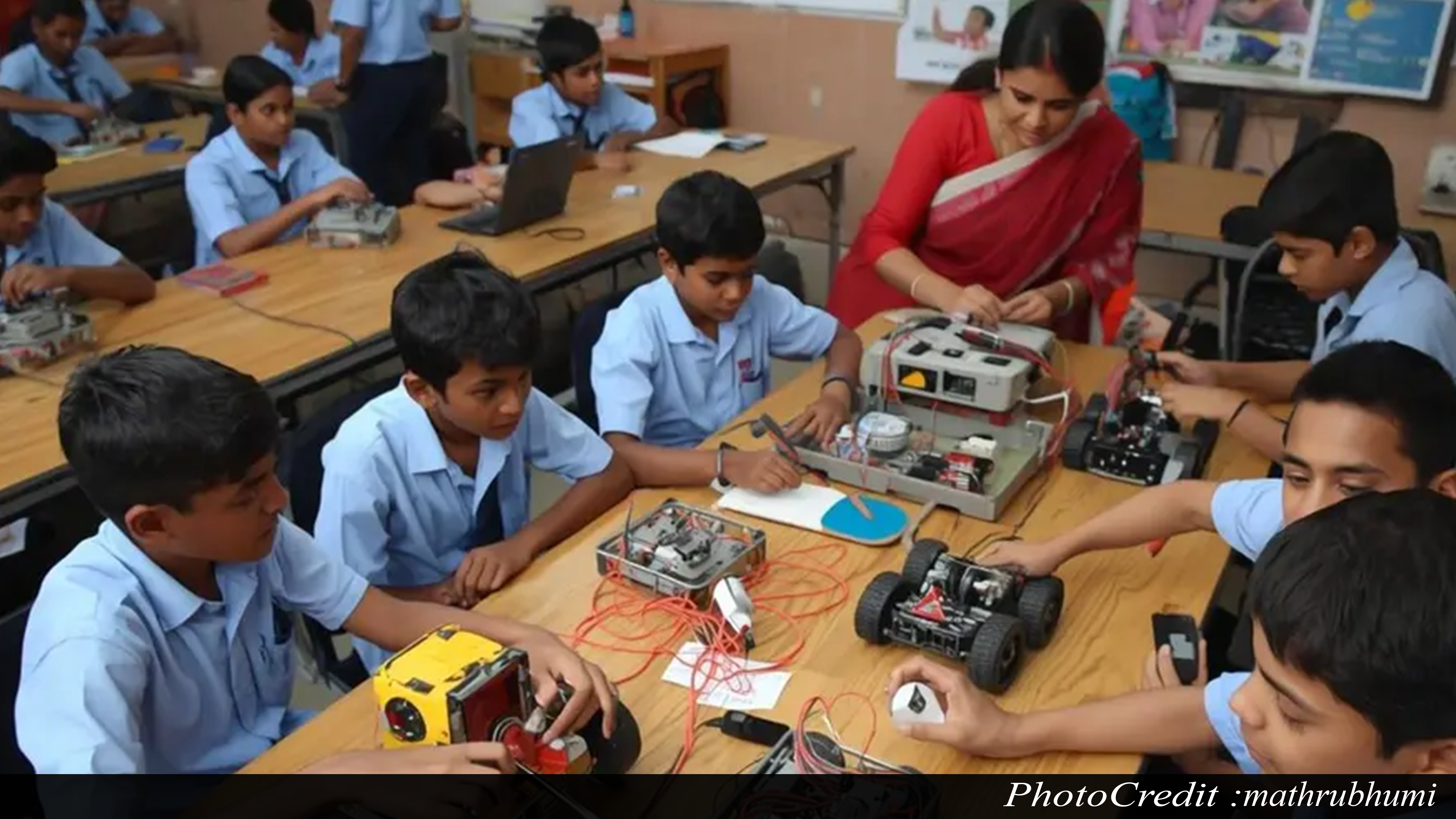
Students will also gain hands-on familiarity with KITE-provided robotic kits, including the Arduino UNO board, breadboards, and LEDs, giving them practical insight into assembling and operating a basic robotic system.
“Students will be introduced to the fundamental components of a robotic system: Input (sensors), Processor (microcontrollers), and Output (actuators). Furthermore, they will get hands-on familiarity with the primary components of the KITE-provided robotic kits,” said K Anvar Sadath.
This session ensures that students understand how robots function and interact with their environment, providing a strong foundation for the subsequent coding exercises.
Session 2: Block-Based Coding with PictoBlox
The second session focuses on practical, hands-on coding using PictoBlox software, a block-based programming platform designed to make coding intuitive for beginners. Students will learn to program their robotic kits to perform tasks such as blinking LEDs, operating buzzers, and other simple automation tasks.
To facilitate effective learning, the training will be conducted under the guidance of trained Little KITES members and mentors in each school. Each group of four to five students will share one robotic kit, ensuring that all participants get adequate hands-on practice.
“These workshops will be conducted under the leadership of trained Little KITES members and mentors in each school. To ensure effective learning, the training is designed with a ratio of one robotic kit for every group of four or five students,” the CEO added.
For schools that do not have a Little KITES IT network, local schools have been instructed to organize the workshops with support from nearby units, ensuring inclusive access for every student.
Goals of the Programme
The Kerala robotics initiative is more than just a technology exercise. Its primary objectives include:
- Enhancing Students’ Understanding of Technology: By directly engaging with robotics kits and coding exercises, students gain practical knowledge that goes beyond textbooks.
- Promoting Hands-On Learning: The programme emphasizes interactive learning, which helps students retain concepts more effectively.
- Preparing for Future Careers: Robotics and automation are increasingly relevant in global industries. Early exposure prepares students for future career opportunities in engineering, IT, AI, and automation sectors.
- Fostering Problem-Solving and Creativity: Working on robotics projects encourages students to think critically, troubleshoot, and innovate, skills essential for the modern workforce.
- Aligning with National and Global Technology Trends: As robotics becomes a cornerstone of industry 4.0, integrating it into school education ensures that students are technologically competent from a young age.
About Little KITES
Little KITES is India’s largest student-driven IT network, providing schools with access to technology training, online resources, and mentorship. Through this network, KITE ensures that even rural or under-resourced schools can participate in the robotics programme. By leveraging existing infrastructure and trained student leaders, Little KITES facilitates smooth implementation of workshops across all districts in Kerala.
How the Training Works in Practice
During the programme, students will actively:
- Assemble robotic kits using Arduino UNO boards, breadboards, and LEDs.
- Understand the role of sensors, actuators, and microcontrollers in robotics.
- Program basic functions in PictoBlox, including controlling LEDs and buzzers.
- Collaborate in small groups, developing teamwork and problem-solving skills.
This combination of assembly, coding, and experimentation ensures a holistic learning experience. Students not only learn to operate robots but also understand the underlying mechanics and programming logic, bridging the gap between theoretical knowledge and practical application.
Preparing Students for the Future
K Anvar Sadath emphasized that the programme aligns with Kerala’s vision for technology education:
“Through this initiative, KITE aims to use high-tech labs to ensure every Class 10 student becomes proficient in modern technology, keeping future career opportunities and the increasing global importance of robotics in focus.”
By exposing students to robotics early, the programme seeks to spark curiosity, build confidence, and encourage innovation, laying the groundwork for future technological proficiency.
Conclusion
Kerala’s robotics training programme for Class 10 students represents a progressive step in integrating technology into school education. With 4.5 lakh students participating and hands-on sessions covering both robotics fundamentals and block-based coding, the initiative ensures that students gain practical knowledge, problem-solving skills, and confidence in modern technology.
By completing the programme before January 15, students will not only enhance their Class 10 learning experience but also gain skills that are increasingly relevant in today’s tech-driven world. Initiatives like this highlight Kerala’s commitment to future-ready education, preparing students to navigate a landscape where robotics and automation play an ever-growing role.