Maharashtra Students Develop AI Lifeline for Autism Care, Clinching GRASP 2026 Top Honour
In a remarkable demonstration of innovation, empathy, and technical acumen, three engineering students from Maharashtra have developed an AI-powered chatbot designed to assist parents of autistic children between therapy sessions. Their pioneering solution won the prestigious GRASP 2026 hackathon, earning them a prize of Rs 1 lakh, internships, national recognition, and an opportunity to collaborate with a European university. The project exemplifies how technology, when combined with human-centric design, can address pressing social challenges, particularly in the healthcare sector.
Understanding the Challenge: Support Gaps for Families of Autistic Children
Autism spectrum disorder (ASD) is a complex neurodevelopmental condition that affects social interaction, communication, and behaviour. In India, families of autistic children face significant challenges, including limited access to professional therapy, high costs, and a shortage of specialists. Many parents are able to meet a therapist only once a month or in some cases, even less frequently leaving long intervals without guidance. During these periods, caregivers often struggle to manage behavioural challenges, apply therapeutic strategies, and maintain developmental progress.
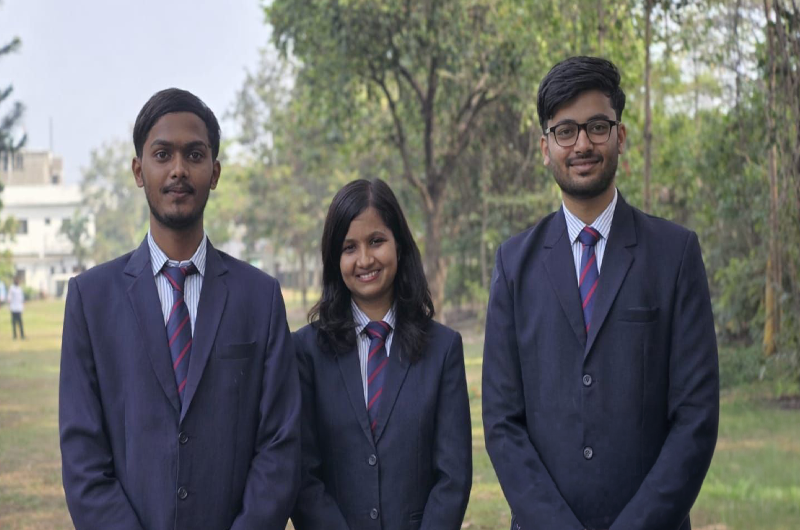
Team Neurostars, comprising Ganesh Ramchandra Mahadik, Vaishnavi Rajkumar Patil, and Abhishek Shivprasad Patil from Rajarambapu Institute of Technology, identified this critical gap. By observing the struggles faced by families, the team conceptualised a solution that could bridge the distance between scheduled therapy sessions and provide real-time, evidence-based guidance to parents. “We took structured clinical knowledge and made it accessible when families need it most,” the team explained. “Think of it as a therapeutic companion that's always available.”
GRASP 2026: A Platform for Empathetic Innovation
GRASP 2026, organised by KRUU in collaboration with ASME India, challenged over 5,000 students nationwide to develop AI solutions addressing real-world problems. Unlike conventional hackathons that emphasise rapid coding or flashy prototypes, GRASP prioritises reasoning-led design, social impact, and problem comprehension.
Anil Srinivasan, Founder and CEO of KRUU, highlighted this philosophy: “We're not looking for students who can just prompt an AI model. We want students who understand the problem deeply. Team Neurostars didn’t build a demo; they built a bridge for families.” Madhukar Sharma, President of ASME India, added, “GRASP goes beyond teaching tools—it helps students confront challenges that shape their communities. When technical skill is paired with empathy, engineering creates real impact.”
By combining technology with an understanding of human needs, GRASP 2026 fosters solutions that are practical, scalable, and socially meaningful. Team Neurostars’ project is a testament to the kind of innovative thinking the event seeks to encourage.
The AI Chatbot: Features and Functionality
The AI chatbot developed by Team Neurostars serves as an accessible guide for parents navigating the complexities of autism care. Key features include:
- Evidence-Based Guidance: The chatbot integrates structured clinical knowledge, enabling it to provide scientifically validated advice for common behavioural challenges.
- Real-Time Assistance: Parents can receive timely recommendations, helping them respond to critical situations when therapists are unavailable.
- User-Friendly Interface: Designed with caregivers in mind, the interface is intuitive and accessible, ensuring that families can navigate the tool without technical difficulty.
- Personalised Recommendations: The chatbot adapts guidance to the child’s behavioural profile and developmental stage, offering tailored support rather than generic advice.
This innovation exemplifies how AI can complement human expertise rather than replace it. By augmenting parental capabilities, the chatbot effectively expands the reach of professional therapy, mitigating the challenges posed by limited human resources.
National Recognition and Rewards
Winning GRASP 2026 brought Team Neurostars significant recognition and tangible rewards. The top prize included:
- Rs 1 Lakh in Prize Money: Acknowledging the team’s ingenuity and the social value of their solution.
- Internships: Opportunities to gain practical exposure and mentorship from leading organisations, enhancing skills and employability.
- Collaboration with a European University: A platform to refine the project, explore international perspectives, and scale the solution globally.
The first and second runners-up, Team Dr. Engineers from K J Somaiya College and Team Generic from Christ University, also developed healthcare-oriented solutions, underscoring the hackathon’s emphasis on socially impactful problem-solving. The total prize pool for GRASP 2026 stood at Rs 1.85 lakh.
Beyond these material rewards, the winners will receive ongoing mentorship from ASME and KRUU. This support will help them transition the prototype into a deployable product, ensuring that the technology can reach families across the country who need it most.
Social Impact and the Role of Student Innovation
Team Neurostars’ chatbot demonstrates how technology can be harnessed to address critical societal challenges. In India, where specialist resources for autism care are scarce, such innovations can provide much-needed support to families. By integrating clinical knowledge into an accessible AI tool, the team has created a scalable solution capable of reaching thousands of households, reducing the strain on overburdened therapists, and empowering parents to take an active role in their child’s development.
The project also exemplifies the transformative potential of student innovation. University students, equipped with technical skills, creativity, and empathy, can tackle societal problems with solutions that are both practical and scalable. GRASP 2026 has showcased how young innovators can apply AI to human-centric problems, moving beyond theoretical exercises to make a real difference in everyday lives.
GRASP Hackathon: Fostering Empathy in Technology
The success of Team Neurostars underlines a critical lesson in contemporary technology development: empathy matters. GRASP 2026 encourages participants to understand the lived experiences of the end users, ensuring that technological solutions are aligned with genuine needs rather than abstract challenges. This approach creates a new generation of engineers and AI specialists who are socially conscious, ethically aware, and capable of creating meaningful impact.
Madhukar Sharma emphasised this ethos: “When technical skill is paired with empathy, engineering creates real impact.” In an era where AI and machine learning are often viewed purely as tools for automation, projects like the Neurostars chatbot reaffirm that technology, when designed with empathy, can be transformative.
Future Prospects
The chatbot’s success at GRASP 2026 opens several avenues for development. With mentorship from ASME and KRUU and collaboration opportunities at a European university, Team Neurostars has the potential to refine their tool, integrate additional functionalities, and scale it for wider deployment. Potential enhancements could include multilingual support, integration with telehealth platforms, and advanced behavioural analytics to provide predictive insights.
Beyond the immediate scope, the project sets a precedent for student-led innovation in healthcare and social sectors. It demonstrates that AI need not be restricted to commercial applications; it can serve as a critical enabler for social equity, healthcare access, and community support.
Conclusion
The achievement of Team Neurostars at GRASP 2026 is a compelling example of how young innovators can merge technical proficiency with social consciousness to create solutions that genuinely improve lives. By developing an AI chatbot that assists parents of autistic children, the students have addressed a critical healthcare gap, showcased the value of empathy in technology design, and underscored the importance of student-led initiatives in national development.
As India continues to embrace AI and emerging technologies, initiatives like GRASP 2026 and projects like the Neurostars chatbot offer a blueprint for how innovation can be harnessed for societal good. In bridging the gap between professional therapy sessions and everyday caregiving, Team Neurostars has provided a lifeline to families, proving that when creativity, empathy, and technology converge, the impact can be profound, tangible, and transformative.
Their success is not just a personal triumph; it is a testament to the potential of Indian students to create socially relevant, human-centric solutions, contributing meaningfully to the national discourse on technology, healthcare, and community well-being.