NIFTEE 2026 Answer Key Released: Objection Window Opens, What Candidates Need to Know
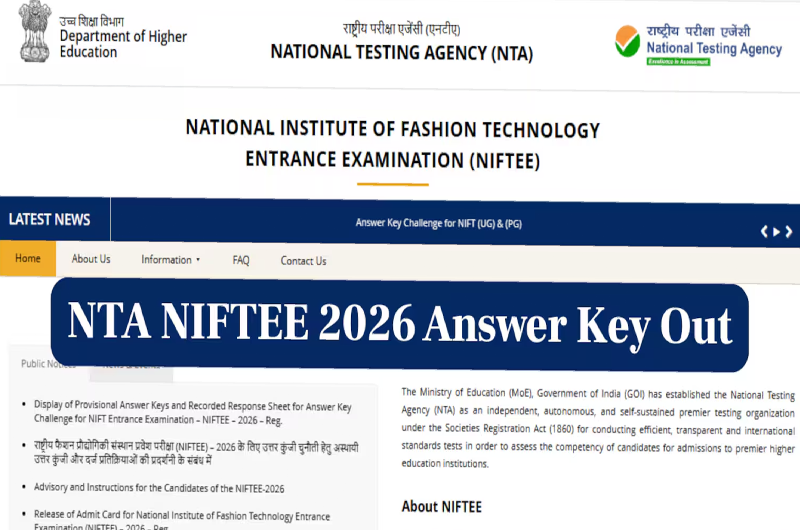
The release of the provisional answer key for the National Institute of Fashion Technology Entrance Examination (NIFTEE) 2026 marks a significant stage in the admission cycle for fashion and design aspirants across India. Issued by the National Testing Agency, the answer key enables candidates to assess their performance prior to the declaration of final results. This interim step not only promotes transparency but also provides an opportunity for candidates to challenge discrepancies before the final evaluation is completed. The answer key, along with recorded responses, has been made available through the official examination portal. Candidates who appeared for the entrance test can access these documents online, estimate probable scores and identify potential errors if any.
Purpose of the Provisional Answer Key
Provisional answer keys serve a crucial function in modern examination systems. They allow candidates to cross-verify their responses against officially recognised answers before final results are compiled. This process enhances fairness, encourages accountability and minimises potential disputes over evaluation.
For competitive examinations such as NIFTEE, where admission decisions can shape academic and professional trajectories, the availability of an answer key is particularly important. It offers candidates early insight into performance trends while also fostering confidence in the integrity of the assessment process.
According to the official notification, candidates may raise objections to specific questions or answers within the stipulated timeframe, ensuring that legitimate concerns receive expert review.
Objection Window and Fee Structure
Candidates dissatisfied with any answer in the provisional key may submit challenges within the designated objection period. For the 2026 cycle, the objection window remains open until February 19, 2026, at 11:50 pm.
A processing fee of Rs 200 per question is applicable for each challenge submitted. The fee must be paid through digital payment channels such as debit cards, credit cards, net banking or UPI. Importantly, challenges without successful payment are not considered for review.
This structured objection mechanism ensures that only serious, substantiated claims are reviewed, maintaining efficiency in the evaluation process while safeguarding candidate interests.
Expert Review and Final Answer Key
Once objections are submitted, subject experts carefully review each claim. If a challenge is found valid, necessary corrections are incorporated into the final answer key. This revised key then becomes the basis for result preparation. Candidates should note that individual notifications regarding acceptance or rejection of objections are typically not issued. Instead, the updated answer key reflects any approved modifications. This approach streamlines communication while maintaining procedural clarity.
Steps to Access the Answer Key
Candidates seeking to review their responses should follow the official procedure:
- Visit the NIFTEE examination portal.
- Log in using the application number, password and security credentials.
- Access the answer key and recorded responses.
- Review responses carefully and calculate probable scores.
- Submit objections, if necessary, before the deadline.
Following these steps ensures candidates remain aligned with official timelines and procedural requirements.
Understanding the Significance of NIFTEE
The National Institute of Fashion Technology Entrance Examination is a gateway to one of India’s premier design education institutions. The National Institute of Fashion Technology is widely recognised for its contribution to fashion, design and creative industry education. Its programmes combine technical training with artistic exploration, preparing graduates for careers in fashion design, textile development, retail management, communication design and related fields. Admission to such institutions is highly competitive, making every stage of the examination process, including answer key verification, critically important for candidates.
Transparency in Contemporary Examination Systems
The publication of answer keys has become a standard practice across national entrance examinations. This trend reflects increasing emphasis on transparency, accountability and candidate empowerment.
From a broader perspective, answer keys:
- Reduce uncertainty by providing early performance indicators.
- Allow correction of inadvertent errors before final evaluation.
- Strengthen institutional credibility.
- Encourage procedural fairness.
These factors collectively contribute to greater trust in examination bodies and their processes.
Preparing for Final Results
While provisional answer keys provide valuable insights, candidates should remember that final scores depend on the revised key after expert review. Hence, calculated estimates may vary slightly from official results.
Candidates are advised to:
- Retain copies of their responses and submitted challenges.
- Monitor official websites for result announcements.
- Prepare necessary documentation for counselling or admission processes.
- Avoid reliance on unofficial answer keys or speculative cut-off predictions.
Staying informed through authentic sources helps ensure a smooth transition from examination to admission stages.
Common Mistakes Candidates Should Avoid
During the objection process, several common pitfalls may arise:
Incomplete documentation: Supporting evidence should be clear and properly formatted.
Missed deadlines: Late submissions are typically rejected without review.
Incorrect payment procedures: Failed transactions invalidate challenges.
Speculative objections: Challenges should be based on credible academic references rather than guesswork.
Awareness of these factors can significantly improve the effectiveness of submitted objections.
Implications for Fashion Education Aspirants
For students aspiring to careers in fashion, design and creative industries, NIFTEE represents more than an entrance examination. It signifies entry into a professional ecosystem that blends creativity with commerce, technology and cultural awareness. The answer key stage therefore marks an important transition from examination anxiety to informed expectation. Candidates gain an early understanding of their prospects while institutions prepare for the next phase of admissions.
Digital Transformation of Examination Processes
The online availability of answer keys reflects broader digitisation trends in education administration. Digital platforms facilitate faster communication, secure data management and efficient candidate services.
Benefits of digital examination systems include:
- Rapid dissemination of information.
- Reduced administrative delays.
- Enhanced accessibility for candidates nationwide.
- Improved record-keeping and transparency.
Such technological integration continues to reshape competitive examination frameworks across India.
Looking Ahead
With the provisional answer key now released, the focus gradually shifts towards final results and subsequent admission procedures. Candidates should remain attentive to official notifications regarding revised answer keys, result dates and counselling schedules. Educational institutions, meanwhile, prepare to welcome a new cohort of design aspirants whose creative contributions will shape future industry landscapes.
Conclusion
The release of the NIFTEE 2026 provisional answer key represents a critical checkpoint in the entrance examination process. By providing candidates with the opportunity to review responses and raise objections, the examination authority reinforces transparency and procedural fairness. For aspirants to the fashion and design sector, this stage offers both reassurance and responsibility, i.e - reassurance through access to evaluation data, and responsibility to engage thoughtfully with the objection process where necessary. As the admission cycle progresses, candidates are encouraged to remain informed, methodical and patient. Ultimately, the answer key is not merely a document of correct responses; it is a mechanism that upholds credibility in one of India’s most competitive creative education pathways.