TS EAMCET 2026 Registration Begins: What Aspirants Need to Know About TG EAPCET 2026
The registration process for the Telangana Engineering, Agriculture and Pharmacy Common Entrance Test (TG EAPCET) 2026 has officially commenced, marking a significant milestone for students seeking admission to professional undergraduate programmes across Telangana. Conducted under the aegis of the Telangana Council of Higher Education, this examination remains one of the most pivotal gateways to engineering, agriculture and pharmacy education in the state. With the application window now open, candidates are advised to act promptly, ensuring all procedural requirements are completed well ahead of deadlines.
A Crucial Gateway to Professional Education
The TG EAPCET examination has long served as a foundational entry route for aspiring engineers, pharmacists and agricultural professionals in Telangana. Each year, thousands of students participate in the competitive assessment, hoping to secure admission to reputed colleges affiliated with state universities.
This year’s registration cycle began on 19 February 2026, with the final date for submission without late fee set for 4 April 2026. The structured timeline reflects the examination authority’s intent to provide sufficient preparation time while maintaining administrative efficiency.
The continued popularity of this entrance test underscores the sustained demand for technical and professional education across India. With industry increasingly driven by innovation, technological expertise and interdisciplinary competence, examinations such as TG EAPCET remain integral to shaping the country’s future workforce.
Application Timeline and Key Dates
Prospective candidates should remain attentive to the schedule associated with the 2026 cycle. Following the application deadline, a correction window will open from 6 April to 8 April 2026, allowing applicants to rectify inadvertent errors in submitted forms. Such a provision demonstrates administrative flexibility while reinforcing the importance of accuracy in official documentation.
Admit cards are expected to be released later in April. For agriculture and pharmacy streams, hall tickets will become available from 23 April, whereas engineering candidates can access their admit cards from 27 April 2026. These documents will be essential for examination entry and should be downloaded and preserved carefully.
The examination schedule itself is staggered across disciplines. Agriculture and pharmacy papers are slated for 4 and 5 May, while engineering examinations will be conducted from 9 to 11 May 2026.
Application Procedure: Navigating the Process
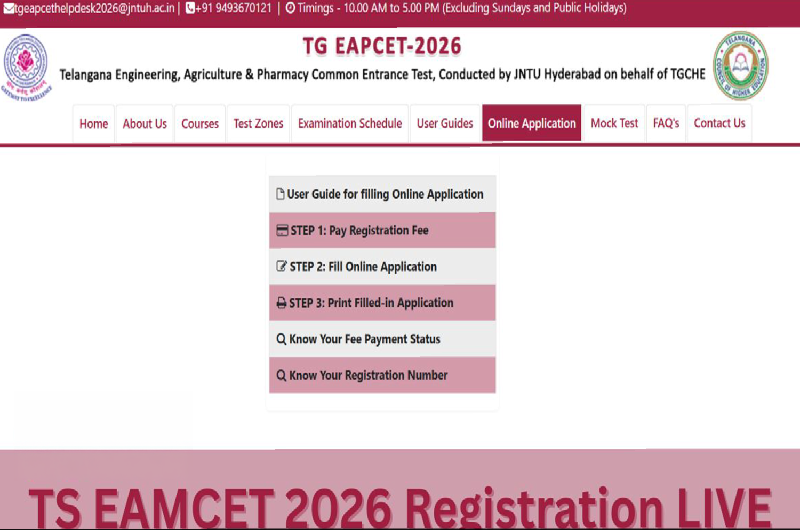
Candidates must complete their applications exclusively through the official online portal. The digital-only submission system reflects the broader shift towards streamlined administrative practices in higher education admissions.
Applicants typically begin by registering on the official website, followed by completion of the detailed application form. This includes academic qualifications, personal information and preferred examination stream. Payment of the prescribed examination fee constitutes the final step before submission confirmation.
It is advisable for candidates to retain both digital and printed copies of the confirmation page. Such precautionary measures ensure preparedness in the event of verification requirements or technical contingencies later in the admission cycle.
Examination Fees and Category Considerations
Fee structures vary according to candidate category and course selection. Applicants from general categories applying for a single stream must pay ₹900, whereas candidates from Scheduled Caste, Scheduled Tribe and Persons with Disabilities categories are charged ₹500. Those opting for both engineering and agriculture/pharmacy streams face a combined fee of ₹1800 for general candidates and ₹1000 for reserved categories.
This differentiated fee structure aligns with longstanding policy frameworks aimed at enhancing access to higher education among historically disadvantaged groups while maintaining operational sustainability.
Academic Opportunities Through TG EAPCET
Beyond procedural details, the significance of TG EAPCET lies in the opportunities it unlocks. Successful candidates gain access to a diverse array of undergraduate programmes spanning engineering disciplines, agricultural sciences and pharmaceutical studies.
Engineering courses continue to attract the largest number of applicants, reflecting the enduring appeal of careers in information technology, electronics, civil infrastructure and emerging fields such as artificial intelligence. Agriculture programmes, meanwhile, have seen renewed interest amid growing recognition of sustainable food systems and agri-technology innovation. Pharmacy education likewise remains vital, especially given global emphasis on healthcare infrastructure and pharmaceutical research.
The examination thus operates not merely as a selection mechanism but as a conduit to sectors critical for national development.
Preparation Strategies for Aspirants
While administrative readiness is essential, academic preparation remains the cornerstone of success. Candidates are encouraged to adopt structured study schedules, revisiting core subjects aligned with the intermediate curriculum. Practice tests, conceptual clarity and time management often prove decisive in competitive entrance examinations.
Equally important is attention to mental wellbeing. The pressures associated with high-stakes assessments can be considerable; balanced routines, adequate rest and supportive peer networks can significantly enhance performance outcomes.
Broader Educational Context
The initiation of TG EAPCET 2026 registrations reflects broader trends in Indian higher education. Increasingly, institutions are prioritising technological competence, interdisciplinary learning and industry-aligned curricula. Entrance examinations thus function not only as filters but also as indicators of evolving educational priorities.
In Telangana specifically, sustained investment in technical education infrastructure has contributed to the state’s growing reputation as a hub for innovation and research. Universities and affiliated colleges continue to expand programmes in emerging technological domains, aligning academic output with industry needs.
The Role of Transparency and Accessibility
One notable feature of contemporary entrance examination administration is the emphasis on transparency. Online application systems, clearly articulated timelines and publicly accessible information portals have significantly improved candidate experience compared with earlier decades.
Nevertheless, challenges persist. Digital access disparities, varying levels of technological literacy and regional educational inequities continue to shape the applicant landscape. Addressing these issues remains a priority for policymakers committed to equitable educational opportunity.
Final Thoughts
As the TG EAPCET 2026 application cycle unfolds, aspirants stand at an important juncture in their academic journeys. The examination offers a gateway to disciplines central to India’s economic and technological future, while simultaneously demanding rigorous preparation and administrative diligence. Candidates are strongly advised to adhere closely to official timelines, ensure accurate application submission and maintain consistent academic preparation. With careful planning and sustained effort, TG EAPCET can serve as a stepping stone to fulfilling and impactful professional careers. In an era where education increasingly intersects with technological innovation, examinations such as TG EAPCET continue to play a vital role in shaping the next generation of skilled professionals. The current registration phase therefore represents not merely an administrative exercise but a significant opportunity for aspiring students to advance their educational ambitions.