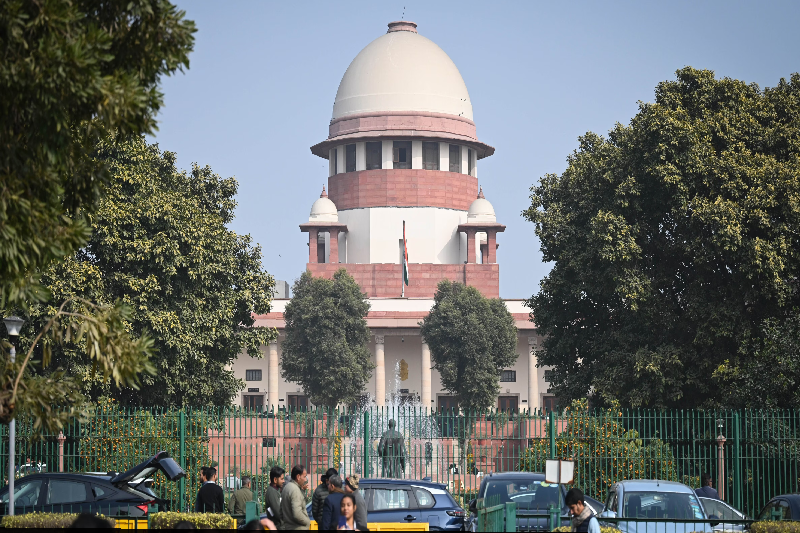
Over-Qualification or Eligibility? Supreme Court Upholds Kerala PSC’s Inclusive Policy on Nurse Recruitment
In a judgment that underscores the nuanced interplay between statutory rules, administrative discretion and judicial oversight, the Supreme Court of India recently dismissed an appeal challenging the Kerala Public Service Commission’s (KPSC) policy of accepting candidates with higher qualifications than those explicitly prescribed in a recruitment notification for the post of Junior Public Health Nurse (Grade II). The apex court’s decision reaffirms a legal principle that has steadily gained currency in Indian service jurisprudence: possession of a higher qualification can encompass the lower, prescribed requirement, provided the educational content substantiates it.
The litigation originated from a recruitment drive first notified on 31 December 2012, which envisaged appointments to the Junior Public Health Nurse (JPHN) cadre, a role critical to Kerala’s extensive public health infrastructure. The notification stipulated the requisite qualification as an Auxiliary Nurse Midwifery (ANM) certificate, an 18-month course focused on community health, maternal care and foundational nursing skills.
However, one candidate, Elizabeth Thomas, held a Diploma in General Nursing and Midwifery (GNM), a three-year credential that encompasses a broader and more advanced curriculum than ANM. When the KPSC initially excluded her from the shortlist on the basis that she did not possess the specific ANM certificate, legal contention ensued.
From High Court to Supreme Court: A Journey Through Legal Interpretation
The dispute travelled through the Kerala Administrative Tribunal and subsequently the Kerala High Court, where both forums accepted the legal argument that Thomas’s GNM diploma could be treated as fulfilling the eligibility condition. This interpretation was grounded in Rule 10 of the Kerala State and Subordinate Services Rules, 1958, which allows for the consideration of higher qualifications as inclusive of prescribed minimum qualifications if logically and academically justified.
Rule 10 essentially functions as a safeguard against rigid, literalist interpretations of recruitment criteria, especially where higher educational attainments necessarily cover the competencies and knowledge areas of lower credentials. In this case, both tribunals took the view that the three-year GNM course subsumes the essential learning outcomes of the shorter ANM programme.
When the matter reached the apex court, a bench of Justices J K Maheshwari and Sanjay Karol did not overturn these conclusions. After hearing senior counsel for the KPSC, the court observed it was “not inclined to interfere in this special leave petition”, effectively endorsing the reasoning of the lower fora.
In affirming this position, the Supreme Court did more than resolve a discrete recruitment dispute: it consolidated a jurisprudential approach that emphasises functional competency over formalistic tick-box eligibility checklists, provided such interpretations are backed by academic and comparative analysis.
The Academic Committee’s Role and Comparative Syllabus Review
Following the Kerala High Court’s pronouncements, the KPSC’s Academic Committee undertook a structured comparative analysis of the ANM and GNM syllabi. The purpose was not merely academic curiosity but to establish evidence-based equivalence between qualifications. The conclusion accepted by the tribunal and court was that the GNM diploma, by virtue of its longer duration and comprehensive content, encompassed the ANM syllabus and more. The Commission thereafter issued executive directions implementing this principle for all pending and future recruitments to the JPHN Grade II post.
This academic assessment underscores a growing recognition within Indian public service systems: that qualitative evaluation of educational content should inform eligibility, not just rigid adherence to prescriptive certificates. Such an approach strives to align recruitment policy with evolving educational standards and the reality of professional competencies in fields such as nursing, where advanced diplomas often equip aspirants with greater clinical exposure and theoretical depth than minimum regulatory requirements.
Balancing Equity and Merit: The Judicial Perspective
One of the crucial legal themes underlying this episode is the principle that “higher qualification is not necessarily disqualification”, a notion that courts have grappled with in various contexts. As one legal commentary on similar cases suggests, while higher qualifications should not disqualify aspirants per se, the burden remains on the Public Service Commission to ensure that such equivalence arises from objective academic comparison and statutory authority, not from arbitrary administrative decisions.
The Supreme Court’s refusal to entertain further interference signalled judicial confidence in the meticulousness of the assessments undertaken by the KPSC and the lower forums. The bench took note of the fact that many petitioners affected by the original exclusion had, in the interim, either been appointed under the revised criteria or had not completed the selection process at all, thereby leaving no persistent or prejudicial claim for judicial redress.
By upholding administrative decisions grounded in expert review and legal precedent, the Court has emphasised predictability and consistency in public employment law, i.e - key values in a system where recruitment disputes frequently generate prolonged litigation with attendant uncertainty for both candidates and public agencies.
The Broader Implications for Public Service Commissions
This judgment carries implications that extend far beyond the JPHN recruitment at issue. Public Service Commissions across India routinely encounter dilemmas about eligibility criteria: whether to interpret them strictly as written, or to accommodate aspirants whose formal titles exceed minimum requirements. In sectors such as health, education and public administration, where professional qualifications evolve rapidly, an overly strict interpretation can exclude capable candidates and undermine workforce quality.
The Supreme Court’s stance, by upholding flexibility where justified, provides a valuable reference point for future cases. It reaffirms that where a higher qualification logically includes a prescribed one, especially after academic comparison, rejecting a candidate solely on nominal differences can be unwarranted. However, such discretion must be exercised with transparency, evidentiary backing and clear procedural safeguards to maintain fairness and avoid ad hoc policymaking.
Healthcare Sector Context and the Value of Nursing Qualifications
The nursing profession in India occupies a unique space within the healthcare system, serving as the spinal cord of patient care, community health, and preventive services. Within this framework, distinctions between ANM and GNM qualifications are substantive: while ANM focuses on basic community health and maternal–child care, the GNM curriculum prepares nurses for wider clinical responsibilities across institutional settings. Accordingly, recognising the latter as inclusive of the former’s competencies makes intuitive sense and aligns with broader trends in healthcare workforce planning.
By acknowledging this reality, the Kerala PSC’s policy and, by extension, the judiciary’s endorsement, contributes to a more dynamic understanding of professional capability. It affirms that higher education can be an asset rather than an impediment to eligibility, provided that it equips the candidate with at least the minimum competencies required by the role in question.
Transparency, Trust and Future Recruitment Policy
The Supreme Court’s judgment also highlights the importance of transparency and procedural robustness in public recruitment. In welfare states like Kerala, where competition for government posts is intense, and where recruitment litigation frequently arises, clarity in eligibility criteria and methodology for assessing qualifications is indispensable. Such transparency fosters trust among aspirants and strengthens institutional credibility.
Looking ahead, recruitment agencies and commissions can draw lessons from this episode. First, a comparative academic analysis of qualifications should become an integrated part of recruitment strategy, particularly where diverse educational pathways intersect with statutory eligibility requirements. Second, institutions should document their decision-making rationale comprehensively to withstand judicial scrutiny. And third, candidates should be made aware of how higher qualifications may interact with eligibility rules, thus reducing confusion and disputes.
Conclusion: Reconciling Qualification with Competence
The Supreme Court’s decision to dismiss the plea against the Kerala PSC’s policy is more than a procedural conclusion to a specific dispute. It is a reaffirmation of a reasoned, evidence-based approach to public employment, i.e - one that respects both statutory criteria and the substantive skills that qualifications represent. By upholding the principle that a higher qualification may satisfy minimum requirements when demonstrably inclusive, the Court has paved the way for recruitment policies grounded in fairness, adaptability and academic integrity.
In an age where educational pathways are increasingly diverse and competencies evolve swiftly, the law must provide space for reasoned interpretation while safeguarding principles of equity and transparency. This judgment reflects that balance, offering a thoughtful template for future public service recruitment policy and adjudication in India.