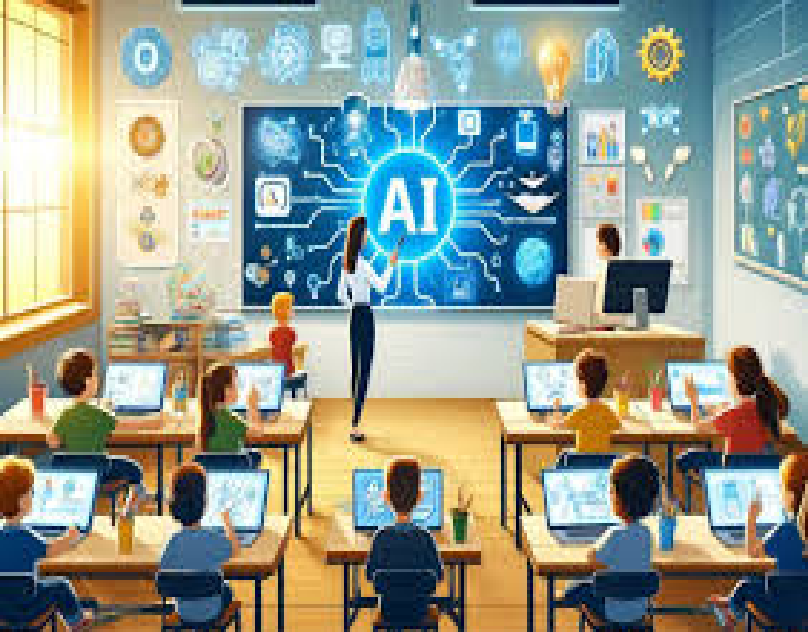
Padhai with AI: Himachal Pradesh’s Digital Learning Initiative and the Emerging Future of Education
The accelerating integration of artificial intelligence into education is no longer a speculative vision but an unfolding reality. Governments, institutions, and educators across the world are increasingly recognising that digital technologies, when deployed thoughtfully, can enhance accessibility, personalise learning, and address persistent educational disparities. Against this backdrop, Himachal Pradesh Chief Minister Sukhvinder Singh Sukhu’s launch of the ‘Padhai with AI’ initiative in Bilaspur district marks a noteworthy step towards embedding technological innovation within public education systems in India.
While modest in geographical scope at present, the initiative symbolises a broader policy direction, one that seeks to harness artificial intelligence not merely as a technological novelty but as a practical tool for academic advancement, equitable access, and systemic educational improvement.
Understanding the Initiative
The ‘Padhai with AI’ platform has been introduced primarily as an AI-enabled digital learning resource designed to support students preparing for competitive examinations in Bilaspur district. The initiative aims to provide technology-driven educational support, offering structured academic content alongside continuous guidance to learners.
Such initiatives are particularly relevant in regions where access to high-quality coaching or specialised academic resources may be uneven. Artificial intelligence, through adaptive learning systems and data-driven feedback mechanisms, has the potential to bridge these gaps by delivering tailored educational assistance regardless of geographical constraints.
The Chief Minister emphasised during the launch that education extends beyond syllabus completion, functioning instead as a transformative force capable of shaping societal progress and expanding intellectual horizons. This articulation reflects a contemporary understanding of education as both an individual and collective developmental instrument.
Artificial Intelligence in Education: A Global Context
Globally, AI is reshaping educational paradigms in multiple ways:
- Personalised learning pathways tailored to individual student performance
- Automated assessment and feedback systems
- Intelligent tutoring platforms capable of adaptive instruction
- Data analytics for institutional decision-making
Such technologies promise efficiency, scalability, and inclusivity. Yet they also raise critical questions regarding digital equity, teacher roles, ethical safeguards, and pedagogical balance.
The Himachal Pradesh initiative sits within this evolving global discourse, illustrating how regional governments are beginning to explore AI’s educational potential within local contexts.
Addressing Educational Inequality Through Technology
Educational inequality remains a persistent challenge across India. Rural and semi-urban districts often face disparities in infrastructure, teacher availability, and access to advanced learning materials. Digital platforms can mitigate some of these challenges by:
- Delivering consistent academic content across locations
- Enabling remote mentorship and counselling
- Providing continuous performance tracking
- Facilitating exam preparation without reliance on costly coaching centres
The ‘Padhai with AI’ initiative explicitly seeks to ensure equal educational opportunities through a fully digital learning environment and ongoing academic counselling support. Such provisions may prove particularly valuable for students navigating competitive examinations, where access to preparatory resources significantly influences outcomes.
The Role of Public-Private Collaboration
The initiative has reportedly received support from NTPC, indicating collaboration between governmental authorities and institutional partners in advancing educational technology infrastructure.
Public-private partnerships have become increasingly prominent in educational innovation. Governments often provide policy direction and institutional legitimacy, while private or semi-public entities contribute technological expertise, infrastructure investment, or specialised knowledge.
However, successful collaboration requires transparency, accountability, and clear alignment with educational objectives rather than purely commercial interests.
Pedagogical Implications: Complement, Not Replacement
While AI offers substantial educational benefits, it is essential to recognise that technology complements rather than replaces human educators. Effective teaching encompasses emotional intelligence, mentorship, cultural sensitivity, and ethical guidance, i.e - qualities that remain uniquely human.
AI-driven platforms should therefore be positioned as supportive tools that:
- Enhance teacher effectiveness
- Reduce administrative burdens
- Provide supplementary academic resources
- Facilitate differentiated instruction
Maintaining this balance ensures that technological innovation strengthens rather than undermines pedagogical relationships.
Continuous Academic Counselling: An Understated Strength
One notable element of the initiative is its emphasis on continuous academic counselling. Educational success is influenced not only by cognitive ability but also by motivation, confidence, mental well-being, and informed career guidance.
Digital counselling platforms can provide:
- Regular performance insights
- Goal-setting assistance
- Stress management resources
- Career pathway information
Such holistic support aligns with contemporary educational philosophy, which increasingly recognises the interplay between academic achievement and emotional well-being.
Challenges That Must Be Addressed
Despite its promise, AI-enabled education initiatives inevitably encounter practical challenges:
Digital Infrastructure Gaps
Reliable internet connectivity, device access, and technical support remain uneven across many regions. Without addressing these factors, digital platforms risk exacerbating existing inequalities.
Teacher Training Requirements
Educators must be adequately trained to integrate AI tools effectively into teaching practices. Professional development becomes essential for meaningful adoption.
Data Privacy and Ethical Considerations
AI systems rely heavily on data. Ensuring robust privacy protections and ethical usage standards is critical to maintaining public trust.
Pedagogical Alignment
Technology should serve educational goals, not dictate them. Careful curriculum integration and evaluation are necessary to ensure educational coherence.
Addressing these challenges proactively will determine the initiative’s long-term effectiveness.
Education, Sustainability, and Broader Policy Vision
Interestingly, the launch coincided with discussions around sustainable energy initiatives in the state, including exploration of geothermal energy potential. While distinct policy domains, both reflect a governance approach that prioritises innovation, sustainability, and future-oriented development.
Education, particularly technology-enabled education, plays a critical role in preparing future generations for environmentally and economically sustainable societies.
The Symbolic Significance of Regional Innovation
Often, educational innovation is associated with metropolitan centres or elite institutions. Initiatives emerging from regional districts challenge this perception, demonstrating that meaningful reform can originate from diverse geographic contexts.
Bilaspur’s adoption of AI-supported learning underscores the growing democratisation of educational innovation. It suggests that technological advancement need not be confined to urban hubs but can extend to communities historically underserved by educational infrastructure.
The Future Trajectory of AI-Driven Education in India
India’s education sector is poised for significant technological transformation. Government initiatives promoting digital literacy, online learning platforms, and technology-integrated curricula indicate sustained policy momentum.
AI-enabled initiatives such as ‘Padhai with AI’ may evolve to include:
- Multilingual adaptive learning tools
- Skill-based vocational training modules
- Integration with national digital education frameworks
- Expanded geographic coverage
If implemented strategically, such developments could substantially enhance educational accessibility and quality nationwide.
Conclusion: Innovation with Purpose
The launch of the ‘Padhai with AI’ initiative in Himachal Pradesh represents a meaningful intersection of technology, education policy, and social aspiration. While still in its early stages, it reflects an emerging consensus that educational systems must adapt to technological realities while remaining anchored in humanistic values.
Artificial intelligence offers unprecedented opportunities to personalise learning, expand access, and improve academic outcomes. Yet its success depends on thoughtful implementation, ethical governance, and sustained commitment to inclusivity.
Ultimately, education remains a profoundly human endeavour. Technology may enhance its reach and efficiency, but its transformative power continues to reside in curiosity, creativity, empathy, and the enduring quest for knowledge. Initiatives such as ‘Padhai with AI’ remind us that when innovation is guided by educational purpose, it can help shape a more equitable and intellectually vibrant future.