PSPCL ALM Recruitment 2026: 3,000 Assistant Lineman Posts Announced
PSPCL ALM Recruitment 2026: A Major Opportunity in India’s Power Sector Employment Landscape
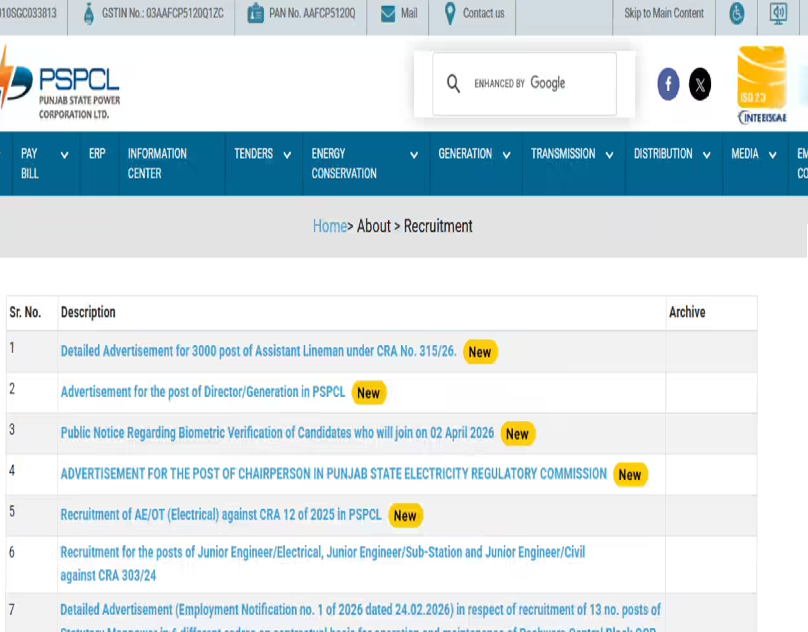
In a significant development for job aspirants in India’s public sector, the Punjab State Power Corporation Limited (PSPCL) has announced a large-scale recruitment drive for 3,000 Assistant Lineman (ALM) posts for 2026. This announcement, issued under Advertisement No. CRA 315/26 marks one of the most substantial hiring initiatives in the state’s power distribution sector in recent years. At a time when employment opportunities in core infrastructure sectors are being closely watched, the PSPCL recruitment drive emerges as both a practical opportunity and a reflection of broader infrastructural priorities.
A Recruitment Drive of Scale and Significance
The sheer magnitude of the recruitment - 3,000 vacancies, immediately sets this notification apart. For many aspirants, particularly those seeking stable government employment, such large-scale openings are rare and highly competitive. The Assistant Lineman role, integral to the functioning of power distribution networks, is central to maintaining and expanding electricity infrastructure across Punjab.
According to official updates, PSPCL’s recruitment aims to fill vacancies across multiple locations in the state, thereby improving service delivery and operational efficiency. The announcement underscores the corporation’s intent to strengthen its workforce in response to growing energy demands and infrastructure expansion.
Beyond the numbers, the recruitment also highlights the continued relevance of technical roles in public utilities. While sectors such as IT and finance often dominate employment discourse, roles like Assistant Lineman remain foundational to everyday life, ensuring uninterrupted access to electricity, a cornerstone of modern society.
Understanding the Role of an Assistant Lineman
The Assistant Lineman position is both technically demanding and operationally critical. It involves the installation, maintenance and repair of electrical distribution lines, transformers and associated equipment. Linemen are often required to work in challenging conditions, including adverse weather, making the role as physically demanding as it is technically skilled.
In essence, Assistant Linemen serve as the backbone of the power distribution system. Their responsibilities extend beyond routine maintenance to include emergency response, fault detection and restoration of power supply during outages. The role, therefore, demands not only technical proficiency but also resilience, adaptability and a strong sense of responsibility.
Application Process and Timeline
While the detailed application schedule is expected to be released on the official PSPCL portal, the recruitment notice indicates that the application process will commence shortly. Candidates are advised to monitor official updates closely, as key dates, including application start and end dates, will be announced in due course.
The application process is expected to be conducted entirely online, in line with recent trends in public-sector recruitment. Prospective candidates will be required to register, complete application forms, upload the necessary documents, and pay the prescribed application fee within the stipulated timeframe.
Given the scale of the recruitment, it is advisable for applicants to complete the process well in advance of deadlines to avoid technical glitches or last-minute complications.
Eligibility Criteria and Academic Requirements
Although the detailed eligibility criteria will be outlined in the full notification, previous recruitment cycles offer a useful reference point. Typically, candidates applying for the Assistant Lineman post are required to have completed matriculation along with a National Apprenticeship Certificate (NAC) in the lineman trade.
Age criteria generally fall within the range of 18 to 37 years, with relaxations applicable to reserved categories as per government norms.
It is important to note that eligibility requirements may vary slightly in the 2026 cycle. Therefore, candidates are strongly encouraged to consult the official notification once released to ensure compliance with all criteria.
Selection Process: Merit and Evaluation
The selection process for PSPCL ALM recruitment is expected to follow a structured evaluation system, typically comprising a computer-based test (CBT), followed by document verification and medical examination.
In earlier recruitment cycles, candidates were assessed on their technical knowledge, general awareness and reasoning abilities. The CBT format ensures a standardised and transparent evaluation process, enabling the organisation to assess a large number of applicants efficiently.
The final selection is usually based on merit, with candidates required to meet minimum qualifying marks and rank high enough on the merit list. Document verification and medical fitness assessments serve as the final stages before the appointment.
Salary Structure and Career Prospects
The Assistant Lineman position offers a stable and respectable career path within the public sector. While exact salary details for the 2026 recruitment will be specified in the official notification, previous data suggests that employees are compensated in accordance with the 7th Pay Commission guidelines.
In addition to the basic pay, employees are entitled to various allowances, including dearness allowance, house rent allowance and medical benefits. Over time, opportunities for career progression, such as promotions to higher technical or supervisory roles, further enhance the position's attractiveness.
For many candidates, the appeal of the role lies not only in financial stability but also in job security and long-term growth prospects within a government organisation.
The Broader Context: Infrastructure and Employment
The PSPCL recruitment drive must also be viewed within the broader context of India’s infrastructure development. As the country continues to expand its power generation and distribution capabilities, the demand for skilled technical personnel remains robust.
Electricity is a fundamental driver of economic growth, enabling industrial activity, digital connectivity and improvements in quality of life. By investing in human resources through large-scale recruitment, PSPCL is contributing to the sustainability and efficiency of this critical sector.
Moreover, such recruitment drives play a vital role in addressing unemployment, particularly among technically trained youth. They provide a pathway for skilled individuals to secure stable employment while contributing to public infrastructure.
Challenges for Aspirants
While the opportunity is substantial, the competition is expected to be equally intense. With thousands of candidates likely to apply for the 3,000 posts, aspirants must approach the recruitment process strategically.
Key challenges include mastering the technical syllabus, managing time effectively during the examination and staying updated with official notifications. Additionally, candidates must ensure that all documentation is accurate and complete to avoid disqualification during verification stages.
Preparation strategies should ideally include a combination of conceptual study, practice tests and revision. Given the technical nature of the role, a strong foundation in electrical principles and practical knowledge will be essential.
The Digital Dimension of Recruitment
Another noteworthy aspect of the PSPCL recruitment process is its alignment with digital governance trends. From online applications to computer-based testing, the process reflects a broader shift towards technology-driven administration.
This digital approach enhances transparency, reduces administrative delays and ensures a more efficient recruitment process. For candidates, it also means greater accessibility, allowing them to apply and participate in the selection process from various locations without extensive travel.
However, it also necessitates digital literacy, as candidates must navigate online platforms, upload documents and manage application procedures independently.
Looking Ahead
The PSPCL ALM Recruitment 2026 represents more than a routine hiring exercise; it is a confluence of opportunity, infrastructure development and administrative modernisation. For aspirants, it offers a gateway into the public sector, combining stability with meaningful work in a critical industry. As the application process unfolds, the onus will be on candidates to remain vigilant, informed and prepared. Equally, the success of the recruitment drive will depend on its execution, ensuring fairness, transparency and efficiency at every stage.
Conclusion
In an employment landscape often characterised by uncertainty, PSPCL's announcement of 3,000 Assistant Lineman posts is both timely and significant. It reflects a commitment to strengthening essential services while providing tangible opportunities for skilled individuals.
For candidates, the message is clear: preparation, awareness and timely action will be key. For the sector, the recruitment drive signals continued investment in the human capital necessary to power the nation’s future.
If executed effectively, PSPCL’s initiative could serve as a benchmark for large-scale public-sector recruitment, balancing opportunity with responsibility and ambition with execution.