Reintroducing Board-Style Assessments in Middle School: Understanding Madhya Pradesh’s New Examination Shift
India’s school education landscape continues to evolve in response to changing academic expectations, policy reforms, and growing concerns about foundational learning outcomes. The decision by the Madhya Pradesh government to implement a board-style examination pattern for Classes 5 and 8 from the 2025–26 academic session represents one such significant policy development. While assessments at these levels were once largely school-based and continuous, the renewed emphasis on structured external examinations signals a broader attempt to strengthen accountability, academic rigour, and learning standards at earlier stages of schooling.
This move has prompted considerable discussion among educators, policymakers, parents, and students alike. Beyond the administrative details, it raises deeper questions about educational quality, assessment philosophy, and the balance between evaluation and holistic development.
The Policy Framework: What Has Been Announced
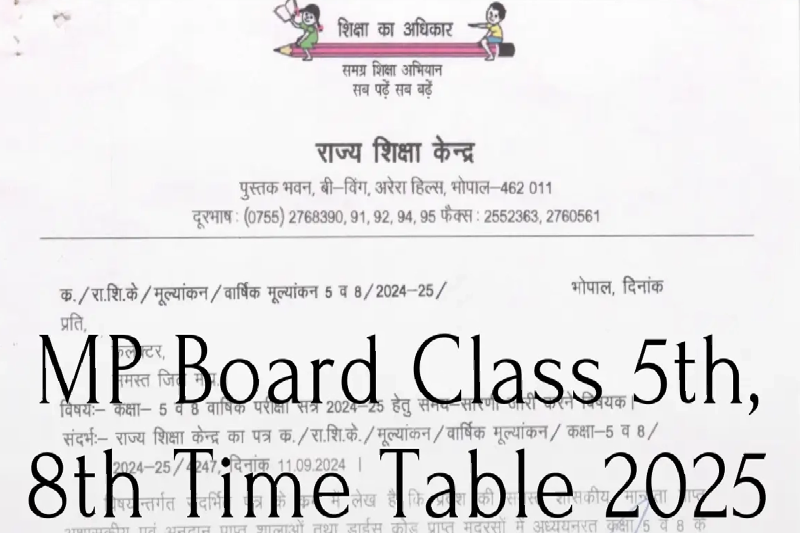
Under the revised policy, Class 5 and Class 8 examinations in Madhya Pradesh will follow a board-exam pattern beginning with the 2025–26 academic year. The examinations are scheduled between 20 and 28 February 2026, with approximately 25 lakh students expected to appear across 12,920 centres statewide, encompassing government schools, private institutions, and madrasas.
Administrative preparations have also incorporated technological interventions. A dedicated IT portal has reportedly been introduced to streamline processes such as student verification, exam centre allocation, roll-number generation, evaluation workflows, and mark-sheet preparation.
Another noteworthy feature is the inclusive provision allowing eligible students to sit for examinations even if registration formalities remain incomplete, with necessary data to be entered subsequently by examination authorities.
These operational decisions suggest a policy aimed not only at tightening academic assessment but also at ensuring logistical inclusivity and administrative efficiency.
Why Board-Style Examinations at Earlier Stages?
The reintroduction of standardised examinations at Classes 5 and 8 reflects a growing concern across India about foundational learning deficits. Numerous educational surveys have repeatedly highlighted gaps in literacy, numeracy, and conceptual comprehension among middle-school learners. Policymakers increasingly recognise that academic challenges at secondary levels often stem from weaknesses accumulated much earlier.
Standardised assessments serve several potential purposes:
1. Strengthening Learning Benchmarks
External examinations can help establish uniform academic expectations across diverse schooling systems. This is particularly relevant in states where educational access spans urban private schools, rural government institutions, and alternative schooling environments.
2. Enhancing Accountability
Board-style assessments introduce a shared responsibility framework involving schools, teachers, administrators, and families. Such accountability can encourage systematic teaching practices and more consistent curricular delivery.
3. Early Identification of Learning Gaps
Structured assessments can help detect academic challenges before students reach high-stakes secondary examinations. Early diagnosis allows targeted remedial interventions rather than reactive correction.
However, these intended benefits must be carefully balanced against developmental considerations and student well-being.
The Pedagogical Debate: Rigour versus Pressure
The reintroduction of formalised examinations at middle-school levels inevitably rekindles longstanding educational debates.
Concerns About Academic Pressure
Critics argue that board-style examinations may increase stress among younger learners, potentially shifting focus from exploratory learning to rote preparation. Childhood education, they contend, should emphasise curiosity, creativity, and conceptual discovery rather than high-stakes performance metrics.
Advocates of Structured Evaluation
Supporters, conversely, suggest that well-designed assessments need not be punitive. Instead, they can cultivate disciplined study habits, encourage conceptual clarity, and prepare students gradually for more rigorous academic stages.
The crucial determinant lies not merely in the existence of examinations but in their design, implementation, and pedagogical intent.
Alignment with Broader Educational Reform Trends
India’s education sector has witnessed multiple reform initiatives in recent years, many aligned with the National Education Policy (NEP) 2020. These reforms emphasise competency-based learning, continuous assessment, and foundational literacy and numeracy.
The Madhya Pradesh initiative can be interpreted within this broader reform ecosystem:
- It reflects a renewed emphasis on measurable learning outcomes.
- It underscores the importance of systematic evaluation in early schooling.
- It highlights the state’s attempt to integrate technological infrastructure within examination management.
Yet, policy coherence will depend on ensuring that assessment reforms remain consistent with learner-centric pedagogical approaches.
The Role of Technology in Examination Management
The introduction of a dedicated digital portal for examination administration signals a noteworthy shift toward digitisation in school governance. By managing processes such as admit cards, attendance records, evaluation workflows, and mark-sheet generation online, authorities aim to enhance transparency, reduce administrative errors, and expedite result processing.
Technology can also facilitate data-driven educational planning. Aggregated performance analytics may help identify regional disparities, subject-specific weaknesses, or demographic learning trends, i.e - insights that can inform targeted interventions.
However, technological integration must be accompanied by infrastructure readiness, particularly in rural areas where connectivity challenges persist.
Implications for Teachers and Schools
Any assessment reform inevitably influences classroom pedagogy. Teachers may need to recalibrate instructional strategies, emphasising conceptual clarity alongside syllabus completion.
Professional development becomes essential in this context. Teachers require:
- Training in competency-based instruction
- Support in formative assessment techniques
- Resources for remedial education
Without adequate professional support, assessment reforms risk becoming procedural rather than transformative.
Schools, meanwhile, must foster supportive academic environments that mitigate examination anxiety while maintaining academic seriousness.
Parental Perspectives and Expectations
Parents often view board-style examinations through dual lenses: aspiration and apprehension. On one hand, structured assessments are perceived as indicators of academic seriousness and future preparedness. On the other, concerns about stress, competition, and excessive academic pressure remain prominent.
Effective communication between schools, parents, and policymakers will be crucial. Transparent explanation of assessment objectives, grading methodologies, and remedial provisions can help alleviate anxieties.
Student Experience: Navigating Transition
For students, particularly those encountering board-style assessments for the first time, the transition may require emotional and academic adjustment. Orientation programmes, counselling support, and preparatory resources can ease this shift.
Equally important is fostering a growth mindset. Examinations should be framed as opportunities for learning reflection rather than definitive judgements of ability.
Balancing Assessment with Holistic Education
Modern educational philosophy increasingly recognises that academic excellence encompasses more than examination performance. Skills such as critical thinking, collaboration, ethical reasoning, and creativity are equally vital.
Thus, while structured examinations can enhance academic accountability, they should coexist with:
- Project-based learning
- Co-curricular engagement
- Social-emotional development
- Experiential education opportunities
Holistic education requires equilibrium between measurable academic outcomes and broader developmental goals.
Looking Ahead: Success Factors for the Reform
The effectiveness of Madhya Pradesh’s examination reform will depend on several critical factors:
- Assessment Quality – Question papers must prioritise conceptual understanding over memorisation.
- Teacher Preparedness – Professional development initiatives must accompany policy shifts.
- Infrastructure Readiness – Both physical examination centres and digital platforms require robust support.
- Student Well-Being Measures – Psychological support systems should be integrated into the examination ecosystem.
- Continuous Policy Review – Data-driven evaluation should guide future refinements.
If implemented thoughtfully, the reform could enhance foundational learning while preserving the developmental ethos of middle-school education.
Conclusion: A Reform with Promise and Responsibility
The introduction of board-style examinations for Classes 5 and 8 in Madhya Pradesh represents a consequential step in India’s evolving educational narrative. It reflects a growing recognition that foundational academic standards must be strengthened early to ensure long-term educational success.
Yet, the true measure of this reform will lie not merely in examination conduct but in its educational impact. Assessments must illuminate learning, not overshadow it; guide improvement, not instill fear; and promote intellectual growth rather than narrow academic competition.
Ultimately, educational reform succeeds when policy ambition aligns with pedagogical wisdom, institutional capacity, and the well-being of learners. The coming years will reveal whether this initiative achieves that delicate balance shaping not only examination systems, but the educational experiences of millions of young learners.