RRB NTPC UG Admit Card 2026 Released for CBT 1 Exam
RRB NTPC UG Admit Card 2026 Released: What It Means for Millions of Aspirants
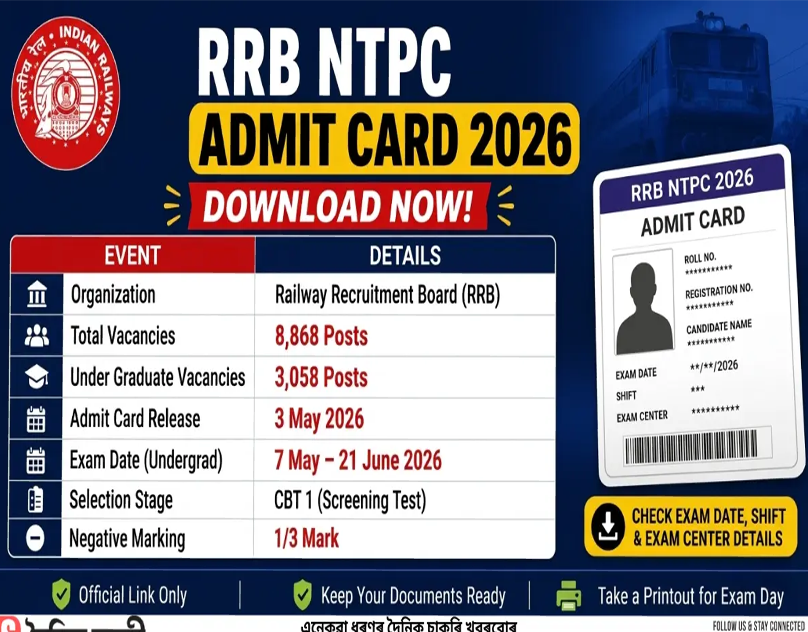
The release of the RRB NTPC Undergraduate (UG) Admit Card 2026 for the Computer-Based Test (CBT-1) marks a pivotal moment in one of India’s largest recruitment exercises. Conducted by the Railway Recruitment Board (RRB), the Non-Technical Popular Categories (NTPC) examination attracts millions of candidates each year, all vying for stable and prestigious positions within Indian Railways. The issuance of admit cards signals not only the commencement of the examination phase but also the culmination of months, if not years, of preparation for aspirants across the country.
According to official updates, candidates who have registered for the NTPC UG recruitment can now download their e-call letters through the respective regional RRB websites. This development is a crucial procedural step, as the admit card is mandatory for entry into the examination hall and serves as the primary identity verification document throughout the selection process.
A Nationwide Recruitment Drive of Unprecedented Scale
The RRB NTPC examination is widely regarded as one of the most competitive government recruitment processes in India. With lakhs of vacancies announced under various Centralised Employment Notifications (CENs), the NTPC recruitment drive spans multiple posts, including clerks, typists, station masters and commercial apprentices.
For the 2026 cycle, the undergraduate-level examination has drawn an exceptionally high number of applicants, reportedly running into millions. This scale underscores the enduring appeal of railway jobs, which are often associated with job security, structured career progression, and attractive benefits.
The CBT-1 stage serves as the preliminary screening test, designed to shortlist candidates for subsequent rounds such as CBT-2, skill tests (where applicable), document verification, and medical examination. As such, performance in CBT-1 plays a decisive role in shaping a candidate’s trajectory within the recruitment process.
Examination Schedule and Phased Conduct
The RRB NTPC UG CBT-1 examination is scheduled to be conducted in multiple phases, beginning in May and extending into June 2026. This staggered approach is necessitated by the sheer volume of candidates and the logistical complexities involved in organising examinations across numerous centres nationwide.
Typically, the examination is held in several shifts per day, ensuring optimal utilisation of infrastructure while maintaining fairness and standardisation. The phased format also allows for better crowd management and adherence to security protocols.
Importantly, admit cards are released in a staggered manner as well, usually four days before the candidate’s allotted examination date. This ensures that candidates receive accurate and timely information specific to their assigned shift and centre.
Key Details on the Admit Card
The admit card, often referred to as the e-call letter, contains a wealth of critical information that candidates must verify carefully. Among the key details included are:
- Candidate’s name and roll number
- Examination date and shift timing
- Reporting time and gate closing time
- Examination centre address
- Important instructions for exam day
These details are not merely informational; they are integral to ensuring a smooth examination experience. Any discrepancies in the admit card must be reported to the concerned RRB authorities well in advance to avoid complications on the day of the test. Additionally, candidates are required to carry a printed copy of the admit card along with a valid photo identification document. Failure to present these documents may result in denial of entry to the examination hall.
The Role of the City Intimation Slip
Before the release of admit cards, the RRB had issued the exam city intimation slip, an important preliminary document that informs candidates of their allotted examination city.
While the city slip does not serve as a substitute for the admit card, it plays a vital role in helping candidates plan travel and accommodation arrangements. This is particularly significant given the nationwide nature of the examination, where candidates may be assigned centres far from their place of residence.
The phased release of city slips and admit cards reflects a carefully structured approach aimed at minimising last-minute disruptions and enhancing candidate convenience.
Navigating the Download Process
Downloading the RRB NTPC UG admit card is a straightforward yet essential task. Candidates must visit the official website of the RRB region through which they applied and log in using their registration number and date of birth.
Once logged in, the admit card can be accessed, downloaded, and printed for future reference. It is advisable to retain multiple copies of the document to safeguard against loss or damage.
Given the high volume of traffic on official websites during peak periods, candidates are encouraged to download their admit cards well in advance rather than waiting until the last moment.
Preparation Strategies in the Final Phase
With the examination dates approaching, candidates are now entering the final and most critical phase of preparation. At this stage, the focus should shift from acquiring new knowledge to consolidating existing concepts and refining test-taking strategies.
1. Revision and Practice
Regular revision of key topics, particularly in mathematics, reasoning and general awareness, is essential. Mock tests and previous years’ question papers can provide valuable insights into the examination pattern and difficulty level.
2. Time Management
Given the time-bound nature of the CBT-1 exam, effective time management is crucial. Candidates must practise answering questions within stipulated time limits to improve speed and accuracy.
3. Stress Management
The intensity of preparation can often lead to stress and anxiety. Maintaining a balanced routine, incorporating adequate rest and adopting relaxation techniques can help candidates stay focused and composed.
Ensuring Compliance on Exam Day
Adherence to examination guidelines is as important as academic preparation. Candidates must arrive at the examination centre well before the reporting time to complete necessary formalities such as biometric verification and frisking.
Prohibited items, including electronic devices, study materials and metallic objects, must not be carried into the examination hall. Strict compliance with these rules is essential to avoid disqualification.
Furthermore, candidates should carefully read the instructions printed on the admit card, as these provide specific guidance on dress code, permissible items and examination conduct.
The Broader Significance of RRB NTPC
Beyond its immediate role as a recruitment examination, the RRB NTPC holds broader socio-economic significance. It serves as a gateway to stable employment for millions of young Indians, particularly those from rural and semi-urban backgrounds. The transparent and standardised nature of the examination process reinforces public trust in government recruitment systems. Moreover, the large-scale nature of the recruitment drive contributes to strengthening the workforce of Indian Railways, one of the largest employers in the country.
Challenges and Expectations
While the release of admit cards marks a positive milestone, it also brings to the fore certain challenges. Managing such a vast examination exercise requires meticulous planning and coordination. Ensuring fairness, preventing malpractice and maintaining logistical efficiency are critical priorities for the conducting authorities. For candidates, the challenge lies in navigating intense competition and maintaining composure under pressure. With millions competing for a limited number of posts, even marginal differences in performance can have significant outcomes.
Looking Ahead
As the CBT-1 examination phase unfolds, the focus will gradually shift towards subsequent stages of the recruitment process. Candidates who successfully clear the preliminary test will proceed to CBT-2 and other evaluative stages, each demanding a higher level of proficiency and preparation. In this context, the release of the admit card is not merely an administrative step; it is the gateway to opportunity. It represents the transition from preparation to performance, from aspiration to realisation.
Conclusion
The release of the RRB NTPC UG Admit Card 2026 for CBT-1 examinations marks a crucial juncture in India’s public recruitment landscape. It provides candidates with the clarity and confidence needed to approach the examination with purpose and preparedness. As millions of aspirants prepare to take this significant step, the coming weeks will be defined by determination, discipline and resilience. For many, this examination represents more than just a career opportunity; it is a pathway to stability, growth and a better future. In the final analysis, success in the RRB NTPC examination will depend not only on knowledge but also on strategy, perseverance and the ability to perform under pressure. With the admit cards now in hand, the stage is set for one of the most anticipated examinations of the year.