Beyond the Classroom: How India’s Global Teacher Prize Win Highlights the Transformative Power of Education
The recognition of Indian educator Rouble Nagi as the Global Teacher Prize 2026 laureate at the World Government Summit is more than an individual accolade; it is a compelling testament to the transformative potential of education when imagination, empathy, and social commitment converge. Awarded a one-million-dollar prize by GEMS Education, this honour places Nagi among a distinguished cohort of educators whose work transcends conventional classroom boundaries and reshapes educational access for marginalised communities.
At a time when global education systems grapple with widening inequities, learning disruptions, and the challenge of making schooling truly inclusive, this recognition invites a broader reflection: what does meaningful education look like in the twenty-first century, and how can educators become catalysts for social change?
Art as Education: Reimagining Learning Spaces
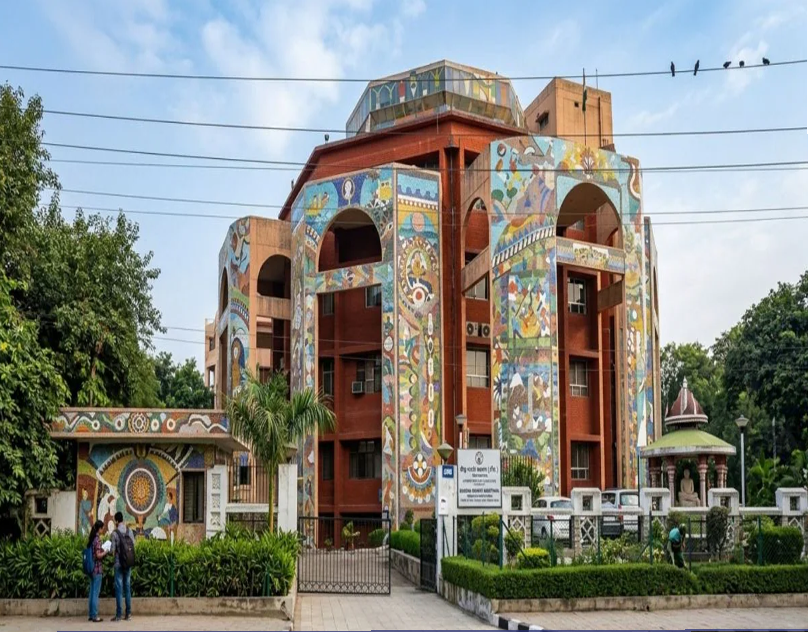
One of the most striking aspects of Nagi’s work lies in her innovative use of public art as a pedagogical instrument. By transforming neglected urban and rural walls into interactive educational murals, she has created informal yet impactful learning environments that teach literacy, numeracy, public health awareness, and environmental responsibility.
This approach challenges traditional assumptions about where and how learning occurs. Education, in this context, is not confined to classrooms, textbooks, or standard curricula. Instead, it becomes embedded in community life, accessible to children who may otherwise remain excluded from formal schooling.
Such initiatives underscore an important pedagogical principle: learning flourishes when it is contextual, engaging, and culturally resonant. Visual art, storytelling, and community participation often succeed where conventional instruction struggles, particularly among children facing socio-economic adversity.
Addressing Educational Exclusion at Scale
Over two decades, Nagi’s initiatives have reportedly facilitated the integration of more than one million children into formal education systems, largely through community-based art programmes and educational outreach.
The scale of this achievement is significant. Educational exclusion remains a persistent global challenge, particularly in regions marked by poverty, migration, or infrastructural deficits. While policy frameworks frequently emphasise enrolment targets, sustained retention and meaningful learning outcomes require grassroots engagement.
Community-driven educational models such as those pioneered by Nagi often succeed because they address not only academic gaps but also psychological, social, and environmental barriers to schooling.
Building Educational Ecosystems, Not Just Programmes
Through the Rouble Nagi Art Foundation, more than 800 educational centres have reportedly been established across India, many situated in underserved communities. These centres provide structured learning opportunities, remedial support, creative engagement, and psychosocial assistance for children both inside and outside formal schooling systems.
Such initiatives represent a shift from isolated interventions to comprehensive educational ecosystems. Effective education reform rarely emerges from singular actions; it requires sustained infrastructure, community trust, and institutional continuity.
Moreover, the emphasis on psychosocial support acknowledges a critical yet often overlooked dimension of education: emotional well-being. Children facing socio-economic hardships frequently encounter trauma, instability, or limited familial support, all of which influence learning readiness.
Teacher Leadership Beyond the Classroom
Another noteworthy aspect of Nagi’s work is her investment in teacher capacity building. By training hundreds of teachers and volunteers, she has developed a scalable model capable of reaching diverse communities across India.
Teacher empowerment remains central to educational transformation. Policies, technologies, and curricula can only achieve limited success without motivated, skilled educators capable of adapting to evolving student needs.
Global research consistently highlights that teacher quality is among the most influential factors affecting student outcomes. Recognition such as the Global Teacher Prize reinforces the profession’s importance, encouraging societies to value educators not merely as instructors but as leaders, innovators, and community builders.
Reducing Dropout Rates: A Critical Achievement
Educational retention remains a pressing concern in many developing contexts. Initiatives associated with Nagi’s work have reportedly contributed to substantial reductions in school dropout rates and improved long-term educational continuity.
Dropout prevention is not solely an academic issue. It intersects with poverty alleviation, gender equity, public health, and workforce development. Students who remain in school longer typically experience improved employment prospects, better health outcomes, and enhanced civic participation.
Thus, interventions that successfully reduce dropout rates generate ripple effects far beyond the education sector.
The Global Teacher Prize: Symbolism and Substance
Established to celebrate exceptional educators worldwide, the Global Teacher Prize recognises teaching as a profession capable of shaping societies. Organised by the Varkey Foundation in collaboration with UNESCO and presented by GEMS Education, the award highlights the global importance of innovative, inclusive education practices.
Such recognition serves both symbolic and practical functions. Symbolically, it elevates the social status of educators, often undervalued despite their societal impact. Practically, it disseminates best practices, inspiring replication of successful educational models across regions.
Education as Social Transformation
Nagi’s intention to channel the prize funds into establishing a vocational institute offering free professional and digital skills training reflects an understanding that education must evolve alongside labour market realities.
Vocational education, once marginalised in many academic hierarchies, is increasingly recognised as essential for inclusive economic growth. Digital literacy, technical skills, and employability training are particularly crucial for youth from disadvantaged backgrounds.
This initiative aligns with global trends emphasising lifelong learning, skills development, and educational pathways that extend beyond traditional academic trajectories.
Lessons for Policy and Practice
Several broader lessons emerge from this achievement:
1. Innovation Often Emerges from Grassroots Engagement
Community-based initiatives frequently identify solutions overlooked by top-down policy frameworks.
2. Creativity Enhances Educational Accessibility
Art, storytelling, and experiential learning can bridge gaps where conventional instruction falters.
3. Holistic Support Sustains Learning
Addressing emotional, social, and economic factors is essential for educational retention.
4. Teacher Recognition Matters
Celebrating educators fosters professional pride and encourages innovation.
These insights are relevant not only for India but for education systems globally.
India’s Educational Narrative on the Global Stage
India’s education sector is increasingly visible internationally, reflecting both its scale and its innovations. From digital learning initiatives to community-based educational models, the country’s experiences contribute meaningfully to global educational discourse.
Recognition of Indian educators at global forums reinforces the country’s role as both beneficiary and contributor in international education development.
The Human Dimension of Education
Ultimately, the significance of this recognition lies not merely in statistics or institutional achievements but in its human dimension. Each child reintegrated into schooling represents restored opportunity, renewed confidence, and expanded life possibilities.
Education, at its best, is an act of empowerment, enabling individuals to participate fully in society, pursue aspirations, and contribute meaningfully to their communities.
Conclusion: Celebrating Education That Transforms Lives
The Global Teacher Prize 2026 awarded to Rouble Nagi highlights the enduring power of education to transcend boundaries, challenge inequities, and foster social transformation. It reminds policymakers, educators, and communities alike that meaningful education extends beyond curriculum delivery to encompass empathy, creativity, and social responsibility.
As education systems worldwide confront complex challenges from technological disruption to socio-economic disparities such examples offer both inspiration and direction. They demonstrate that when education is rooted in compassion, innovation, and inclusivity, it can transform not only classrooms but entire communities.
The true legacy of this recognition will lie not in the prize itself, but in the continued expansion of educational opportunities for those who need them most, a mission that remains central to the promise of education everywhere.