IIT Kanpur’s Guinness World Record E-Bicycle Initiative: A Landmark Moment for Sustainable Mobility in India
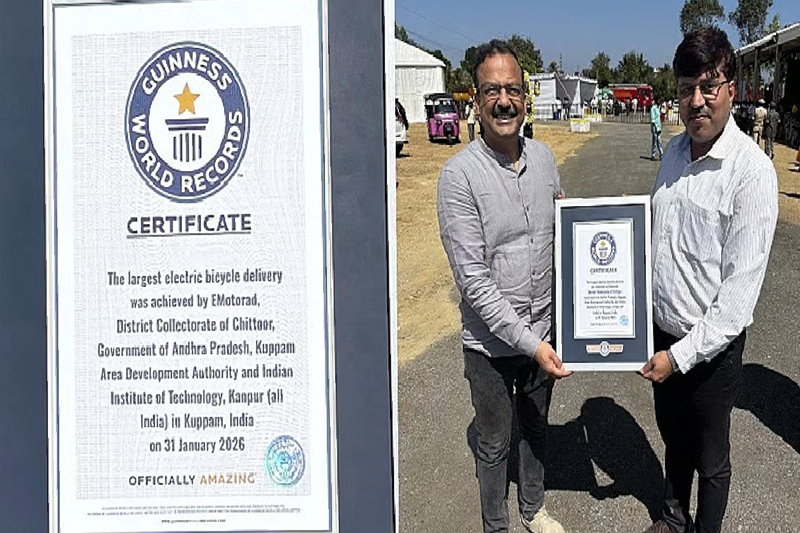
India’s transition towards environmentally responsible mobility continues to gather momentum, and academic institutions are increasingly playing a pivotal role in shaping this shift. A recent milestone highlighting this intersection of research, innovation, and sustainability comes from the Indian Institute of Technology (IIT) Kanpur, which has been recognised in the Guinness World Records for the largest electric bicycle delivery programme. This achievement not only celebrates technological innovation but also underscores the growing importance of sustainable transportation solutions in India’s development trajectory.
The initiative, implemented under a large-scale electric bicycle distribution programme, reflects a collaborative effort involving academic expertise, government leadership, and industry participation. It signals how coordinated action across sectors can translate sustainability ambitions into tangible community outcomes.
A Collaborative Achievement
The record-setting programme was undertaken in partnership with electric mobility company EMotorad, the Kuppam Area Development Authority (KADA), the Chittoor District administration, and the Government of Andhra Pradesh. The electric bicycles were distributed as part of a broader sustainability initiative aimed at encouraging low-carbon transport options at the local level.
Such partnerships illustrate the increasingly collaborative nature of technological innovation. Universities no longer operate in isolation; instead, they function as knowledge hubs connecting policymakers, entrepreneurs, and communities. The IIT Kanpur initiative exemplifies how academic research can directly inform public policy and grassroots implementation.
The Kuppam Net Zero Vision
Central to the project was IIT Kanpur’s involvement through the Kuppam Net Zero Constituency Project, where the institute served as a technical partner. Its role included providing planning expertise, technical guidance, and strategic oversight to ensure the programme’s effective execution.
Net zero initiatives at the constituency level represent an emerging model in climate action. Rather than focusing solely on national policies, such localised interventions demonstrate how targeted technological solutions can address environmental challenges in specific communities.
By integrating sustainable mobility into regional planning, the project offers a template for similar initiatives across India.
Academic Leadership Driving Practical Solutions
The programme benefitted significantly from the contributions of IIT Kanpur alumni and researchers. Key figures involved in coordination included Hari Shankar, consultant to the Net Zero project, and Vikas Marmat, Project Director at KADA. Senior academic leadership from IIT Kanpur, including project investigators, also supported the initiative.
This collaboration highlights the role of alumni networks and academic expertise in advancing real-world sustainability solutions. Universities increasingly serve as incubators not only for knowledge but for leadership capable of navigating complex technological and societal challenges.
Sustainability and Public-Focused Innovation
IIT Kanpur’s leadership has emphasised that the Guinness recognition reflects the institute’s longstanding commitment to sustainability and public-oriented innovation. The initiative demonstrates how technical knowledge, supportive policy frameworks, and effective administrative coordination can produce measurable environmental impact.
This alignment between academic excellence and societal benefit is increasingly central to higher education’s evolving mission. Institutions are expected not only to generate research but also to translate it into solutions addressing pressing global challenges such as climate change.
Why Electric Bicycles Matter
Electric bicycles occupy a unique position within the sustainable transport ecosystem. They offer:
- Reduced dependence on fossil fuels
- Lower carbon emissions compared to motor vehicles
- Affordable mobility solutions for short distances
- Improved accessibility in semi-urban and rural areas
Officials involved in the programme have noted that e-bicycles provide a practical and cost-effective alternative for daily commuting, particularly where conventional public transport may be limited.
In India, where urban congestion, air pollution, and fuel costs remain significant concerns, such alternatives carry considerable socio-economic relevance.
Broader Implications for India’s Green Mobility Transition
India has set ambitious environmental targets, including commitments to reduce emissions intensity and expand renewable energy capacity. Sustainable transport forms a critical component of this strategy.
The IIT Kanpur initiative reflects several broader trends:
1. Localised Climate Action
Implementing sustainability projects at the constituency level enables tailored solutions that account for regional needs.
2. Academic–Industry Partnerships
Collaboration between universities and private companies accelerates innovation and deployment.
3. Government Facilitation
Public policy support remains essential for scaling sustainable technologies.
Together, these elements illustrate how systemic change in mobility requires multi-stakeholder engagement.
Educational Institutions as Catalysts of Change
Founded in 1959 and recognised as an Institute of National Importance, IIT Kanpur has long been associated with engineering excellence and interdisciplinary research. The institute continues to work with governments and communities to translate academic expertise into practical public solutions.
Such initiatives reinforce the evolving role of higher education institutions as active participants in national development agendas. Universities today are not merely centres of learning but agents of innovation capable of addressing societal challenges.
Challenges in Scaling Electric Mobility
Despite encouraging progress, several challenges remain in expanding electric mobility:
- Infrastructure development, particularly charging networks
- Cost barriers for widespread adoption
- Consumer awareness and behavioural change
- Policy harmonisation across states
Addressing these challenges requires sustained collaboration among policymakers, researchers, industry stakeholders, and communities.
Lessons from the Guinness Record Initiative
The IIT Kanpur project offers several instructive lessons:
Integrated Planning Works
Combining academic expertise with administrative coordination enhances programme effectiveness.
Community Engagement is Essential
Sustainability initiatives succeed when they address local needs and gain community acceptance.
Recognition Encourages Replication
International recognition, such as a Guinness World Record, can inspire similar projects elsewhere.
These lessons may inform future sustainable mobility initiatives both within India and globally.
A Vision for the Future
As India continues its journey towards cleaner transportation, electric bicycles may become an increasingly familiar sight in cities and rural areas alike. Their affordability, efficiency, and environmental benefits position them as an accessible entry point into the broader electric mobility ecosystem.
Academic institutions will likely remain central to this transformation. By bridging theoretical research with practical implementation, universities can accelerate innovation while ensuring solutions remain socially inclusive.
Conclusion: Innovation with Purpose
IIT Kanpur’s Guinness World Record achievement represents more than a statistical milestone; it embodies a vision of innovation aligned with sustainability and public welfare. The successful delivery of the largest electric bicycle programme demonstrates how research institutions, governments, and industry partners can collaboratively address environmental challenges.
As climate imperatives intensify, such initiatives will become increasingly vital. They illustrate that sustainable mobility is not merely an aspirational goal but a practical, achievable reality when expertise, policy support, and community engagement converge.
For India, striving to balance economic growth with environmental responsibility, this achievement offers both inspiration and a blueprint for future action. It reinforces the idea that technological innovation, when guided by purpose, can drive meaningful societal transformation.