Delhi Government Invites EoI for Digital Learning Content and Formative Assessment in Schools
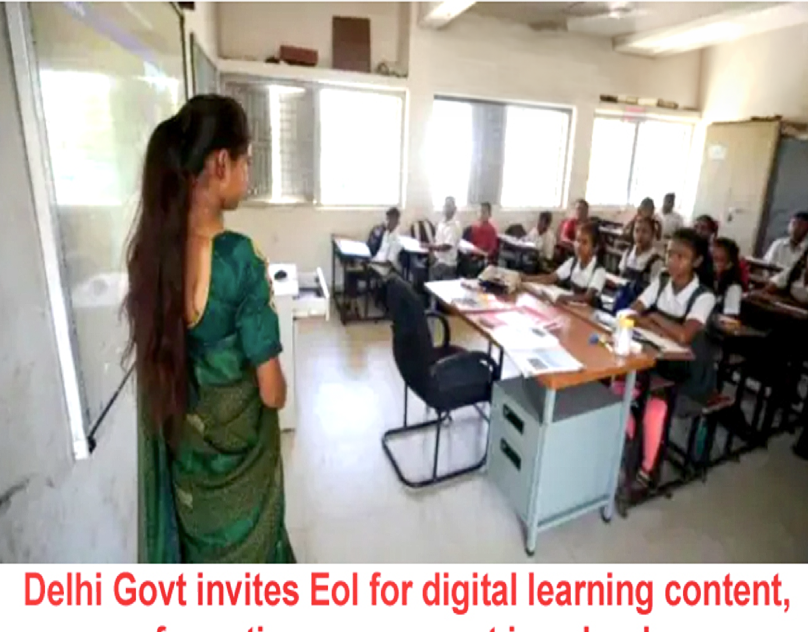
Delhi Govt invites EoI for digital learning content, formative assessment in schools
In a decisive step towards reimagining the future of public education, the Delhi government has invited expressions of interest (EoI) to develop curriculum-aligned digital learning content alongside a comprehensive formative assessment system across its extensive network of government schools. The initiative, spearheaded by the Directorate of Education (DoE), reflects a broader policy shift towards integrating technology with pedagogy, signalling a commitment to modern, student-centric learning environments.
At a time when educational systems globally are embracing digital transformation, Delhi’s proposal represents an ambitious attempt to bridge the gap between traditional classroom instruction and contemporary learning needs. By targeting more than 1,000 schools, the initiative aims to create a scalable and sustainable framework capable of enhancing both teaching quality and student outcomes.
A Strategic Push Towards Digital Integration
The decision to invite EoIs marks the beginning of a collaborative process, wherein the government seeks expertise from organisations specialising in educational technology. These agencies will be tasked with designing teaching and learning materials that align closely with the prescribed curriculum, while also developing robust assessment tools.
The intent is not merely to digitise existing content but to fundamentally transform how knowledge is delivered and absorbed. By exploring innovative technological solutions, the DoE aims to create an ecosystem where learning is interactive, immersive and adaptable to diverse student needs.
Embracing a Blended Learning Model
Central to this initiative is the adoption of a blended learning model, which combines face-to-face classroom teaching with digital resources. This approach recognises that while traditional teaching methods retain their value, they can be significantly enhanced through the thoughtful integration of technology.
Blended learning offers flexibility, allowing students to revisit concepts at their own pace while benefiting from guided instruction in the classroom. It also encourages active participation, shifting the focus from passive reception to engaged learning. In the Delhi government’s vision, classrooms are no longer confined to physical spaces but extend into digital environments that support continuous learning.
Introducing Hyper-Interactive 3D Content
One of the most innovative aspects of the proposal is the development of hyper-interactive, 3D simulation-based content for students in Classes 6 to 12. Designed in alignment with NCERT guidelines, this content seeks to bring abstract concepts to life through visualisation and simulation.
Such immersive tools have the potential to transform subjects that are often perceived as challenging, such as science and mathematics, into engaging and accessible learning experiences. By enabling students to interact with concepts in a virtual environment, the initiative promotes deeper understanding and retention of knowledge.
Strengthening Formative Assessment Practices
Alongside digital content, the government plans to introduce a structured formative assessment system that evaluates student learning on a continuous basis. Unlike traditional summative assessments, which focus primarily on end-of-term results, formative assessments emphasise ongoing feedback and improvement.
The proposed system will include chapter-wise tests aligned with specific learning outcomes, offering teachers the flexibility to schedule assessments based on classroom progress. This approach not only provides a more nuanced understanding of student performance but also enables timely interventions to address learning gaps.
Data-Driven Insights and Performance Tracking
A key feature of the initiative is its emphasis on data-driven decision-making. The integration of digital tools with assessment systems will generate actionable insights into student performance, teacher engagement and overall learning trends.
Through centralised dashboards, authorities will be able to monitor progress at multiple levels, from individual students to schools and the entire system. This level of visibility is expected to enhance accountability and support evidence-based policy decisions.
Moreover, the system will offer targeted remediation suggestions linked to specific concepts, enabling educators to tailor their teaching strategies to individual student needs. This personalized approach represents a significant departure from one-size-fits-all models of instruction.
Extending Learning Beyond the Classroom
Another notable dimension of the proposal is its focus on enabling learning beyond school hours. The digital content will be accessible through mobile applications and web platforms, allowing students to engage with educational material at home.
Features such as revision modules, practice exercises and progress tracking tools will empower students to take greater ownership of their learning. For those who may require additional support, the ability to revisit lessons and access supplementary resources could prove particularly beneficial.
Accessibility and Inclusivity in Design
Recognising the diverse socio-economic landscape of its student population, the Delhi government has emphasised the need for inclusive design. The digital content will be available in both Hindi and English, ensuring that language does not become a barrier to learning.
Furthermore, the solution is expected to function across multiple devices and even in low or no internet connectivity environments. This consideration is critical in ensuring equitable access, particularly for students who may not have consistent access to high-speed internet or advanced devices.
Empowering Teachers Through Training
While technology forms the backbone of the initiative, its success will ultimately depend on the people who implement it, teachers. To this end, the project includes provisions for training and capacity building, equipping educators with the skills needed to effectively integrate digital tools into their teaching practices.
This focus on professional development reflects an understanding that technology is most effective when complemented by informed and confident educators. By fostering a culture of continuous learning among teachers, the initiative seeks to create a more dynamic and responsive educational environment.
Ensuring Data Privacy and Security
In an era where data plays a central role in education, concerns around privacy and security cannot be overlooked. The Delhi government has underscored its commitment to adhering to strict data protection norms, ensuring that student information is used solely for academic purposes and in compliance with regulatory frameworks.
This emphasis on ethical data use is essential in building trust among stakeholders, particularly as digital platforms become increasingly integral to the learning process.
Operational Support and Implementation Oversight
The selected service provider will not only develop content and assessment systems but also be responsible for ongoing operational support. This includes programme monitoring, periodic reporting and implementing corrective measures in schools where adoption may be limited.
Such a comprehensive approach to implementation is indicative of the government’s intent to ensure that the initiative translates into tangible outcomes, rather than remaining a conceptual framework.
Broader Implications for Public Education
The significance of this initiative extends beyond the immediate context of Delhi’s government schools. It represents a broader shift in how public education systems in India are responding to the demands of the 21st century.
By integrating technology with pedagogy, the government is addressing multiple challenges simultaneously, improving learning outcomes, enhancing engagement and preparing students for a digitally driven world. At the same time, it is setting a precedent that other states may seek to emulate, thereby contributing to a larger transformation in the education sector.
Challenges and the Road Ahead
Despite its promise, the initiative is not without challenges. Effective implementation will require robust infrastructure, including reliable access to devices and connectivity. Equally important will be the need to ensure that teachers and students are adequately supported during the transition.
There is also the question of sustainability. Maintaining and updating digital content, ensuring continued teacher training and addressing emerging technological needs will require sustained investment and strategic planning.
Nevertheless, the government’s proactive approach, seeking expertise through the EoI process and emphasising comprehensive support mechanisms, suggests an awareness of these challenges and a commitment to addressing them.
Conclusion
The Delhi government’s invitation for expressions of interest to develop digital learning content and formative assessment systems marks a pivotal moment in the evolution of public education. It reflects a forward-thinking vision that recognises the transformative potential of technology while remaining grounded in the principles of accessibility, inclusivity and pedagogical integrity.
If implemented effectively, this initiative has the potential to redefine the learning experience for millions of students, equipping them with the skills and knowledge needed to navigate an increasingly complex world. More importantly, it underscores a fundamental shift in educational philosophy, one that places the learner at the centre and embraces innovation as a means of achieving equity and excellence in education.